
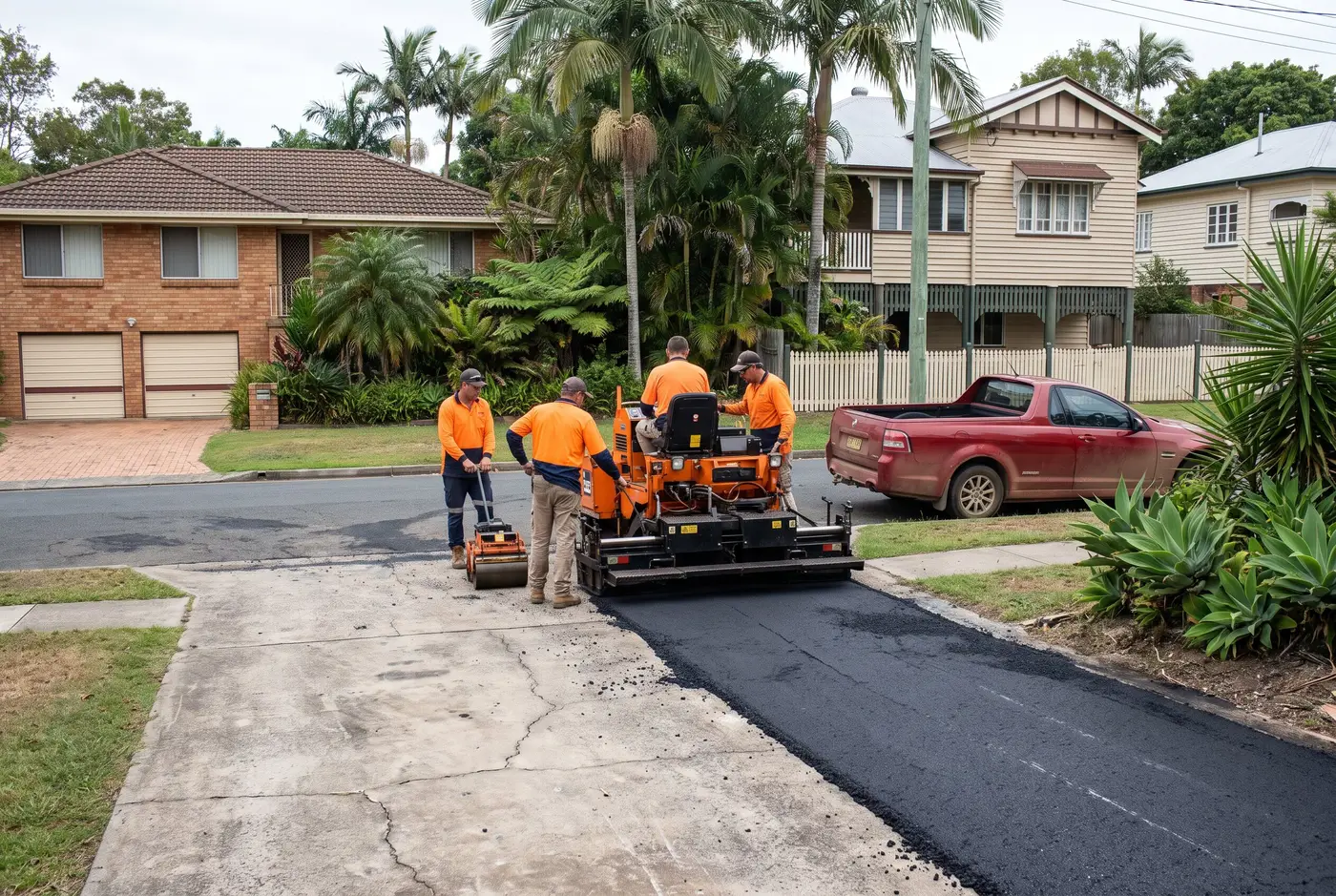
Resurfacing suits a driveway with a sound base but a worn surface, while full replacement is needed once the base itself has failed. A contractor can tell you which one you actually need.
When a bitumen driveway starts to crack, fade or crumble, you are faced with a fairly clear choice: resurface what is there or remove it and start again. Both are legitimate options, but they suit different situations, and picking the wrong one can mean paying for work you did not need or patching a problem that keeps coming back.
What is bitumen resurfacing?
Resurfacing means applying a fresh layer of bitumen over the existing driveway. The base stays in place, and the new layer bonds to it to restore a smooth, sealed finish. It suits driveways where the underlying base is still structurally sound but the surface itself has deteriorated through weathering, UV exposure or general wear.
What is full replacement?
Full replacement means removing the existing surface and base entirely, then building a new foundation before laying fresh bitumen. It is the right call when the base has failed, when drainage problems have caused structural damage, or when the driveway is beyond what patching or resurfacing can fix.
Key benefits of resurfacing over replacement
Lower cost. Resurfacing is typically significantly cheaper than full replacement, since you avoid the labour and disposal costs of demolition and use less material overall. For many Brisbane homeowners working to a budget, this is often the deciding factor.
Faster completion. A resurfacing job on a standard residential driveway can often be finished in a single day. Full replacement usually takes two to three days, plus curing time before the surface can handle vehicle traffic.
Less mess and disruption. Because the base stays intact, there is no excavation, no skip bins full of rubble, and minimal disturbance to garden beds or edging nearby. The site stays tidier throughout the job.
Less material waste. Reusing the existing base means less material leaves the site and less new material is needed, a practical benefit if you are conscious of construction waste.
When replacement is the right choice
Resurfacing is not always the answer. Full replacement is the better option when:
- The base has failed and is no longer structurally stable
- Cracking is widespread across the whole surface, not just isolated patches
- Drainage problems are causing water to pool and undermine the sub-base
- The driveway has already been resurfaced multiple times and cannot support another layer
- You are changing the layout or gradient of the driveway
A qualified contractor should assess the base condition before recommending either option. Deep cracks, crumbling edges or sections that are visibly sinking usually point to replacement being unavoidable.
How to tell which option you need
A quick walk over your driveway tells you a lot:
- Surface cracks only, with no movement underfoot: resurfacing is likely enough
- Sections that flex or sink when you walk on them: the base has failed, replacement is needed
- Widespread alligator-pattern cracking: base failure, replacement required
- Fading, oxidation or minor surface erosion: resurfacing will restore it well
Bitumen driveways in Brisbane's climate
Brisbane's subtropical climate accelerates bitumen deterioration. High UV exposure oxidises the surface and makes it brittle and prone to cracking, while heavy summer rainfall can overwhelm a poorly drained base. Resurfacing every seven to ten years can meaningfully extend the life of a well-built driveway and delay the need for a full, costlier replacement.
Resurfacing vs. replacement at a glance
- Cost: resurfacing is markedly cheaper; replacement costs more due to demolition and new base construction
- Timeframe: resurfacing typically completes in a day; replacement takes two to three days plus curing
- Disruption: resurfacing is minimal; replacement involves excavation and debris removal
- Best for: resurfacing suits surface-level wear; replacement is needed for base failure or structural damage
- Longevity: a resurfaced driveway commonly adds seven to fifteen years; a replacement resets the driveway's full lifespan
Frequently asked questions
Can I resurface a driveway that has potholes?
Small, isolated potholes can sometimes be patched before resurfacing, but widespread potholing usually signals base failure, which needs replacement instead.
How often should a bitumen driveway be resurfaced?
Roughly every seven to ten years in Brisbane's climate, though this varies with traffic, drainage and how well the original base was built.
Does resurfacing look as good as a full replacement?
Yes, a well-executed resurfacing job gives a smooth, even, like-new finish, provided the base underneath is sound.
Whether resurfacing or replacement is right for your driveway, the right call starts with an honest assessment. We can inspect your existing surface, advise on the best approach, and provide a free quote for your Brisbane property.