
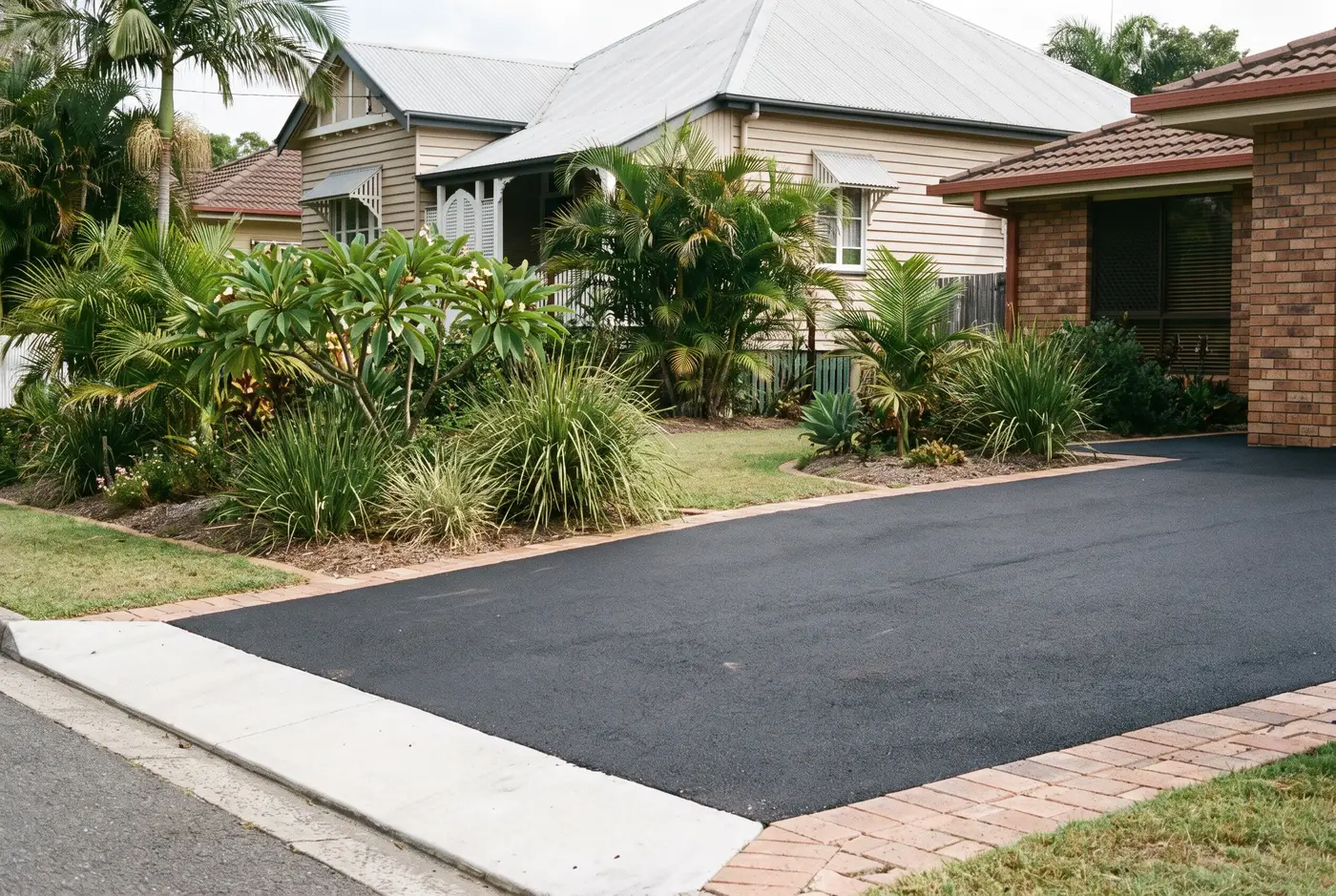
The right edging protects a bitumen driveway's edges from spreading and cracking while shaping how the driveway looks, with concrete, pavers, stone, timber and metal all viable options depending on your priorities.
Edging and border choices can significantly influence not just the look of your bitumen driveway, but also its durability and long-term performance. For homeowners in Brisbane, blending practicality with aesthetic appeal is essential when it comes to choosing the right border option for daily use and Queensland's climate.
Understanding why edging matters
Edging does more than outline a driveway, it provides structural support along the sides of the pavement. Bitumen surfaces, like asphalt, are flexible by nature, and without proper borders they can spread, crack or degrade sooner than expected due to vehicle turning forces and general wear. A quality edge acts as a restraint that improves durability and reduces maintenance needs.
Defined borders also stop water and soil creeping into the edges of the driveway. Left unprotected, moisture can weaken the base materials beneath the surface and speed up cracking or uneven settling. Well-installed edging helps manage water flow and preserves the driveway's structural integrity.
Borders also play a strong aesthetic role. The transition between driveway and landscape can be smooth, striking or subtly crafted to complement your home's exterior, so it's worth choosing edging that matches both function and look.
Classic concrete edges
Concrete borders are a popular choice for bitumen driveways because of their durability and neat finish. They act as a solid barrier that helps contain the bitumen surface and resist impact along the edges, and can be formed into clean lines or decorative finishes depending on your preference.
Concrete edging suits a crisp, modern look, or a property that needs a sturdy containment method. Because it's long-lasting and low maintenance, it tends to be cost-effective over time.
Pavers and brick borders
For homeowners after style as well as strength, brick or pavers offer both. These materials give a defined border that lifts kerb appeal and works well alongside landscaping such as gardens or pathways.
Paver and brick edges come in a range of colours and shapes, making them a versatile design choice. Installation typically costs more than basic options, but the result is often a striking driveway outline that boosts the property's appearance while still acting as an effective edge restraint.
Gravel and natural stone
If you prefer a more organic or rustic look, gravel or crushed stone edges are an adaptable choice. Gravel borders create a softer transition from paved surface to lawn or garden and help with drainage.
Natural stone edging delivers durability while adding texture to the driveway perimeter. Larger stones such as Belgian blocks are particularly robust and lift the driveway's overall profile. These options may need occasional topping up or repositioning, but they remain a solid choice for both appearance and performance.
Timber and landscape edging
Timber or treated landscape timbers give a warm, natural border that can echo other wooden features on your property. They're easier to install than concrete and can be cut to follow curves or custom shapes.
Timber does have a shorter lifespan than stone or concrete and may need replacing sooner in wet or harsh conditions. For the right landscape and budget, though, it remains a fitting option.
Metal and plastic landscape strips
Lightweight metal or plastic edging strips are a good budget option, offering quick installation and a tidy result. They're often used along lawns or gardens next to the driveway to stop grass or plants encroaching on the bitumen surface. They're not as durable as stone or concrete, but they're an effective choice where visual neatness and simple installation matter more than heavy structural support.
Best practices for lasting results
Whatever edging material you choose, proper installation is key. Edging should sit slightly below the top surface to accommodate the natural expansion and contraction of the bitumen. Excavating a shallow trench and compacting a firm base before placing the edging improves strength and longevity.
Drainage is another consideration. Edging shouldn't trap water against the driveway surface, which can cause undermining or soft spots in the base. Proper grading away from the driveway, along with regular maintenance, supports both durability and appearance.
How edging complements a professional driveway build
When you're planning a bitumen driveway in Brisbane, building the right edging plan in from the start lifts both performance and looks. Edging is an integral part of a complete driveway solution, shaping how well the pavement handles daily use and Queensland's weather.
For many Brisbane homeowners, investing in a quality edging and driveway package together means both the surface and its borders are professionally installed and finished, with results built to last for residential and commercial properties alike.
Choosing the right edging and border solution is an important decision for any bitumen driveway. Whether durability, looks or cost-effectiveness matters most to you, there's an option to match your property's needs. For advice tailored to your driveway, get in touch for a free quote.
Frequently asked questions
What is driveway edging?
Driveway edging is the border installed along the sides of a driveway surface, providing support, protecting the edges and adding to the overall look.
Why is edging important for bitumen driveways?
Edging stops bitumen edges spreading, reduces the risk of cracking, and helps manage water and separate the driveway from garden beds.
Which edging material is most durable?
Concrete edging is typically the most durable, low-maintenance option for a high-traffic driveway.
Can edging improve property value?
Well-designed borders can lift kerb appeal and the overall look of a driveway, which can support property value.
Does edging require maintenance?
Most edging types need only minimal upkeep, though gravel or timber may need periodic topping up or replacement.