
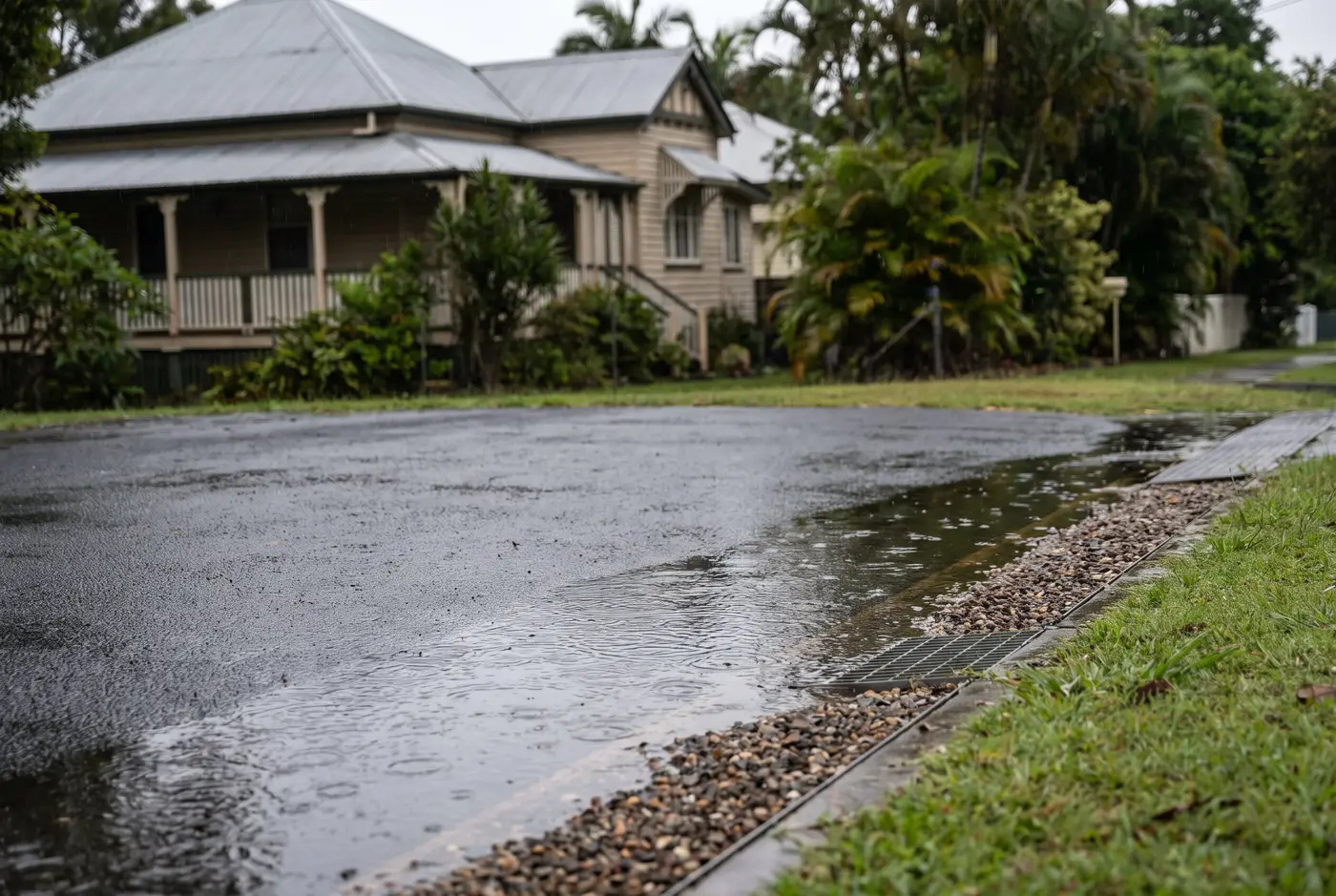
Poor drainage is one of the fastest ways to damage a bitumen driveway. Look for pooling water and returning cracks, and fix the fall or channels before the base is compromised.
Bitumen driveways are built to handle years of use, but even the strongest surface can weaken if water is not managed properly. Pooling or trapped moisture damages the base underneath, leading to cracks, soft spots and potholes.
In Brisbane's humid, storm-prone conditions, this can happen quickly. What starts as a small puddle after a downpour can turn into a costly repair if the underlying drainage problem is left alone.
Why proper drainage matters
Drainage is central to keeping a bitumen driveway durable and safe. When rainwater cannot flow away, it seeps through cracks and weakens the layers underneath. Over time, the base softens or shifts, and uneven sections and new cracks start to appear.
Brisbane's subtropical climate, with intense summer storms, tends to expose poor drainage design quickly. A driveway that holds water for long periods after rain is likely to deteriorate faster than one with a properly designed fall. Getting water moving away from the surface, rather than sitting on it, is one of the simplest ways to protect the driveway's lifespan.
Signs of drainage issues
Drainage problems are usually easy to spot after heavy rain if you know what to look for:
- Puddles that stay long after rain has stopped
- Cracks forming in the same spots repeatedly
- Soft or spongy patches on the surface
- Potholes that keep coming back after repair
- Water flowing toward the house or garage rather than away from it
These signs mean water is not draining as it should and may already be affecting the base. Catching them early helps preserve both the strength and the appearance of the driveway.
How water damages bitumen driveways
When water does not drain away properly, it causes several kinds of damage that shorten a driveway's working life:
- Erosion of the base material beneath the surface, causing sinking and cracking
- Expansion and contraction of trapped moisture with temperature changes, which stresses and fractures the bitumen
- Pothole formation, as cracks let in more water and accelerate the damage
Proper drainage keeps the base dry and stable, breaking this cycle and keeping the driveway strong and even.
Effective ways to improve drainage
A few practical changes go a long way toward preventing water damage:
- Installing side drains or channels to direct water away
- Ensuring the surface has a gentle, consistent slope
- Repairing cracks as soon as they appear, before water can get in
- Adjusting nearby garden beds or soil levels that direct water toward the driveway
- Resurfacing damaged areas where the base has already been affected
Even small changes, like re-levelling a garden bed or adding a shallow channel, can make a noticeable difference through Brisbane's wet season.
Protecting your driveway and when to seek help
A bitumen driveway stays strong when drainage is properly managed. Even small cracks or soft spots can signal a problem developing below the surface, and addressing them early prevents more expensive repairs later.
Good drainage means water flows away from the surface instead of collecting beneath it, which prevents erosion and cracking and keeps the driveway smooth and safe to use.
If your driveway regularly holds water or shows signs of sinking, it is worth getting a professional assessment. We can identify the cause, recommend a suitable drainage solution, and make sure the fix holds up to Brisbane's conditions.
Frequently asked questions
How can I tell if my driveway has poor drainage?
Pooling water, soft patches, or cracks that keep returning after repairs are the clearest signs of a drainage issue.
What causes drainage problems in bitumen driveways?
Uneven slopes, blocked channels and incorrect installation are the most common causes of water collecting and damaging the base layers.
Can I fix driveway drainage problems myself?
Minor issues, like clearing debris or sealing small cracks, can often be handled yourself. Larger problems affecting the base are best left to a professional.
How often should drainage be checked?
Inspect your driveway after heavy rain, or at least once a year, to make sure water is flowing away as it should.
Contact us for expert advice on driveway drainage and maintenance, or enquire online to get a plan for keeping your bitumen surface durable and long-lasting.