
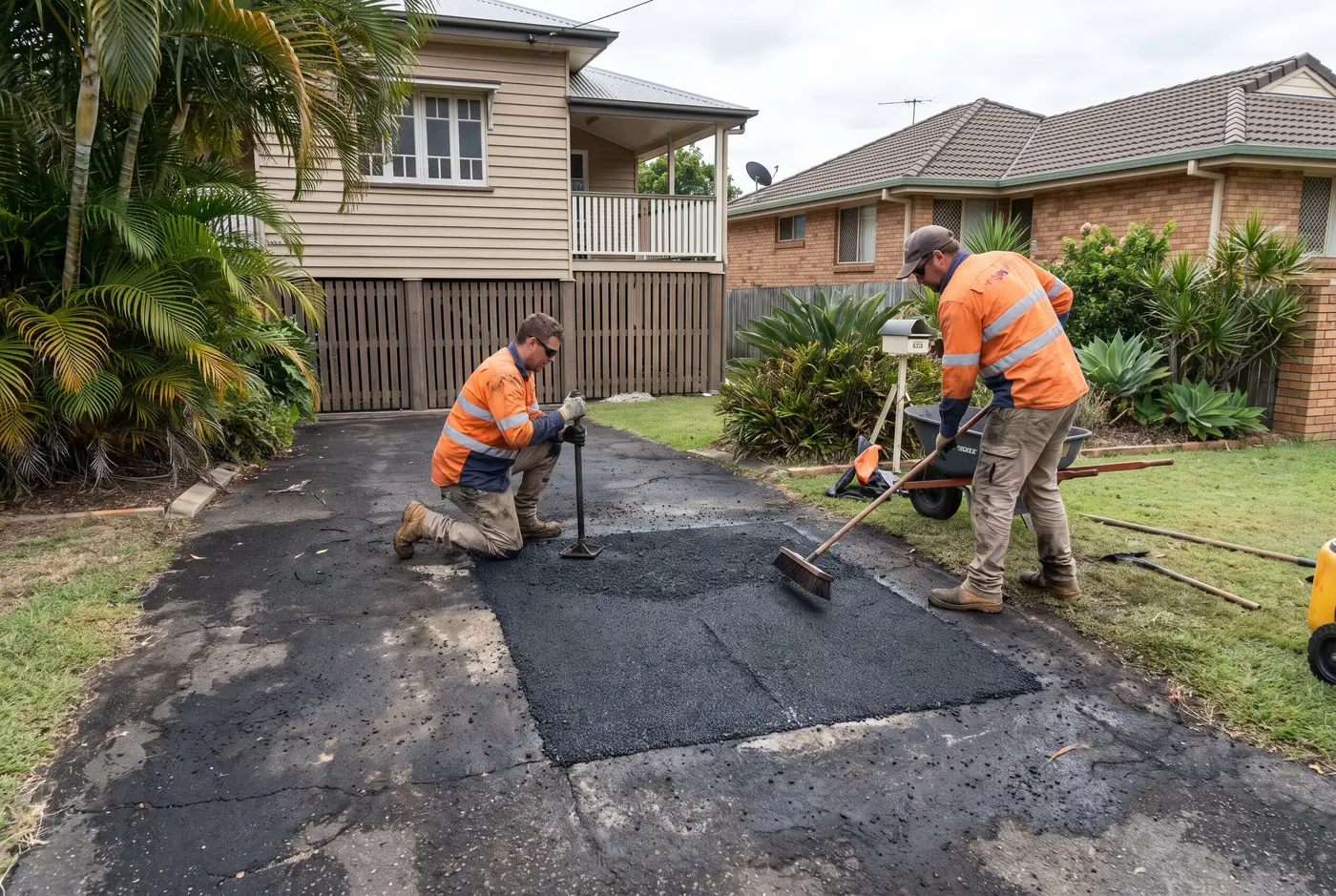
Cracks, potholes, fading, drainage problems and soft spots are the most common issues on Brisbane bitumen driveways, mostly driven by UV, heavy rain and heavy vehicles. Catching them early keeps repairs small.
Bitumen driveways are built to handle years of use, but Brisbane's combination of intense sun, heavy summer storms and reactive clay soils in many suburbs puts real pressure on the surface over time. Cracks, potholes and fading are common signs that a driveway needs attention.
Left alone, these problems tend to get worse rather than better. Water finds its way through even small cracks, softens the base underneath, and turns a minor repair into a much bigger one. The good news is that most issues are manageable if you catch them early and know what you are looking at.
Cracks appearing in the surface
Cracks are one of the most common problems on bitumen driveways, often showing up as the surface ages or after a run of hot, dry weather followed by heavy rain. Left untreated, they let water into the base layers, which weakens the structure and can lead to soft patches or full potholes.
Small, isolated cracks are usually straightforward to repair. Wider or spreading cracks can point to a deeper problem with the base and are worth having inspected.
How surface cracks are typically repaired:
- Clean out the crack and remove any loose material
- Fill the gap with a suitable crack sealant
- Keep an eye on the area for further movement afterward
Fixing cracks early is the single easiest way to avoid a bigger repair bill later.
Potholes developing
Potholes form when cracks are left untreated and water gets underneath the surface. Vehicles driving over the weakened base cause it to break apart, and the hole grows quickly, especially after a wet spell. Beyond being a nuisance, potholes let in even more water and accelerate damage to the base.
How potholes are typically repaired:
- Cut out the damaged section
- Rebuild the base with compacted material
- Apply fresh bitumen and level the surface to match the surrounding area
Fading and surface wear
Brisbane's UV exposure is intense, and over time it oxidises the bitumen, fading it from black toward grey and making the surface more brittle. Fading on its own does not usually affect how the driveway performs, but it is a sign the bitumen is drying out and becoming more prone to cracking.
How to restore colour and strength:
- Apply a protective seal coat
- Keep the surface clean and free of oil or fuel stains
- Repair small cracks before sealing over them
Regular seal coating is one of the more effective ways to slow this process down.
Drainage problems
Poor drainage is a major contributor to driveway deterioration, particularly during Brisbane's storm season when large volumes of water can move across a property quickly. Water pooling on the surface, or flowing toward a garage or house, works its way under the bitumen and softens the base.
How to improve drainage:
- Adjust the slope so water is directed away from the house
- Install drainage channels or grates along low points
- Resurface any low or uneven sections that collect water
Soft or spongy spots
A soft or spongy section usually means water has already reached the base layer and weakened it. The surface flexes under pressure rather than holding firm, and if it is not repaired, it will eventually collapse into a pothole.
How soft spots are typically repaired:
- Remove the affected section
- Replace and properly compact the base material
- Apply new bitumen and level the surface
This kind of damage is structural, so it is best handled by an experienced contractor rather than a surface-level patch.
Edge breakdown
The edges of a driveway carry less structural support than the centre, which makes them more vulnerable to tyre pressure, water flow and erosion over time. Once the edges start crumbling, cracks can spread inward toward the main surface.
How edges are typically reinforced:
- Add solid edging using concrete, pavers or compacted gravel
- Rebuild damaged sections with new material
- Direct water away from the sides of the driveway rather than across them
When to call in a professional
Simple maintenance handles a lot of driveway wear, but widespread cracking, ongoing drainage issues or recurring potholes usually point to a deeper structural problem. A proper inspection identifies the actual cause rather than just patching the symptom, and gets the surface level and slope corrected for the long term.
Frequently asked questions
How long does a bitumen driveway typically last?
A well-built and properly maintained bitumen driveway commonly lasts 15 to 20 years, though this depends on the base quality, climate and how much traffic it carries.
What signs mean my driveway needs attention?
Uneven colouring, surface depressions, or fine cracks appearing after rain are all worth acting on before they spread.
Can heavy vehicles damage a bitumen driveway?
Yes. Repeated heavy loads can cause cracking and surface deformation, particularly if the base was not built to carry that weight. A stronger base helps prevent this.
Is seal coating really necessary in Brisbane's climate?
It helps considerably. Brisbane's strong UV and seasonal heavy rain make regular sealing a worthwhile part of protecting the surface against oxidation and water damage.
How can I maintain my driveway between repairs?
Sweep off debris, clean up oil spills promptly, and check the surface after major storms to catch small problems before they grow.
We work on bitumen driveway repair, resurfacing and drainage fixes across Brisbane. If your driveway needs an assessment, get in touch for advice on the best next step.