
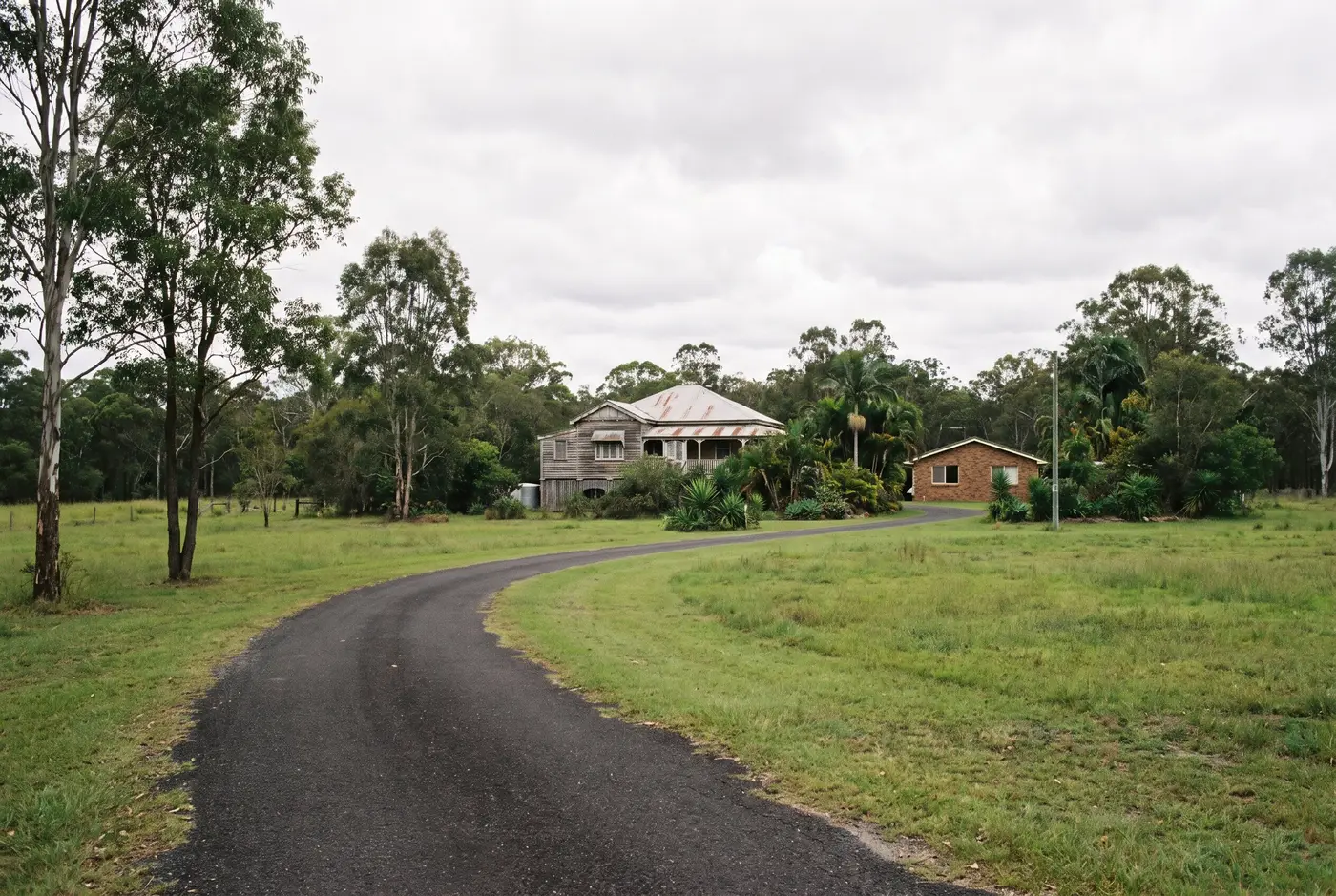
Bitumen suits long acreage driveways well because it flexes with reactive clay soils and handles heavy vehicle use, but results depend heavily on drainage design and base preparation, especially over long runs.
Owning an acreage property outside Brisbane comes with space, privacy, and room to move. It also comes with practical access challenges that suburban homeowners do not have to think about.
A long driveway is not just part of the look. You are relying on it every day, for vehicles, deliveries, trailers, and in some cases farm equipment. That is a very different set of demands to a ten-metre suburban strip.
Bitumen remains one of the most common choices for rural and semi-rural properties across greater Brisbane. It handles long distances well and copes with Queensland conditions, but it is not the right choice for every block, and results depend heavily on how the job is designed and prepared from the start.
Why bitumen suits larger blocks
Acreage driveways deal with more than most suburban surfaces ever will. Longer runs mean greater exposure to sun, rain, and water runoff, and larger properties tend to see heavier traffic: utes, trailers, delivery trucks, and occasionally machinery.
Bitumen handles this well because it is flexible. Rather than resisting ground movement, it moves with it slightly, and on rural land where soil shifts with the seasons that flexibility makes a real difference to how long the surface lasts. It also gives you a sealed, low-dust surface over long driveways, provided the base work is done properly.
Terrain and soil: what to assess before you start
Brisbane acreage blocks vary a lot. Slopes, drainage channels, low-lying areas, and reactive soils all need to be factored in before a contractor quotes the job.
Sloped driveways need correct grading to manage water flow. Without it, rainwater runs underneath the surface and weakens the base from below, often causing problems within the first couple of years. Getting drainage right at the design stage costs far less than fixing it afterwards.
Soil type matters too. Clay soils, common across Brisbane and surrounds, expand when wet and contract when dry, and bitumen accommodates this movement better than rigid surfaces like concrete. That said, it does not make up for inadequate base preparation. On acreage blocks especially, poor groundwork is one of the most consistent reasons driveways fail early.
Length and layout: how acreage driveways differ
A driveway that runs several hundred metres is a different project entirely from a standard suburban job, and it changes how you should think about material choice. Concrete becomes less practical over long distances, with slower installation and a higher cost for the same coverage. Gravel is simple to lay but needs regular re-grading after rain and creates ongoing dust and displacement.
Bitumen sits between the two: quicker to install than concrete, far less maintenance than gravel, and it delivers a sealed surface that holds up to regular vehicle use. Cutting corners on base thickness and drainage to save money upfront tends to cost more in repairs within a few years than doing it properly from the start.
Brisbane weather and how it affects bitumen
Queensland summers are hard on exposed surfaces. Bitumen softens slightly in heat, which helps since it flexes rather than cracks, useful on long, open driveways without shade cover. The catch is that freshly laid bitumen needs careful treatment during hot weather, particularly when heavy vehicles are making tight turns or braking hard, so your contractor should advise on this for your site conditions.
Rain is the bigger long-term concern. Water that finds its way into surface cracks or underneath the base can cause significant damage over time, including surface movement, depressions, and eventual failure. Proper drainage design, sealed edges, and routine inspections before and after the wet season all help prevent this.
Maintenance on acreage properties
Bitumen is genuinely low maintenance compared to gravel, which is one reason it is so popular on larger properties, but low maintenance does not mean no maintenance. Checking the surface a couple of times a year, especially after significant rain, lets you catch small cracks before water gets into them. A crack sealed early costs almost nothing to fix; left alone, it can become a much larger repair.
Resealing every few years keeps the surface protected from UV damage and extends its lifespan. Keeping vegetation trimmed back from the edges also matters more than people realise, since root intrusion causes edge breakdown that can spread inward if not addressed early.
For practical guidance on what to look for and when to act, a regular bitumen surface maintenance routine covers the key inspection points and care steps that apply particularly well to long rural driveways.
Bitumen vs gravel vs concrete: a straight comparison
Gravel is the cheapest to install but the most work to live with. Heavy rain washes it out, dust is an ongoing issue, and over a long driveway constant refilling and grading becomes genuinely tiresome.
Concrete is the most durable sealed option, but the cost on large acreage blocks is hard to justify unless you have specific reasons for it, and repairs are more visible when they eventually occur. Bitumen gives you a sealed surface without the concrete price tag and without the ongoing hassle of loose materials, which is why it keeps getting chosen for most Brisbane acreage properties.
Installation timing and access
On acreage blocks, the driveway is often the only access point to the property, so disruption needs to be planned around. Bitumen is quicker to install than concrete, and in many cases sections can be completed progressively, keeping at least limited access open during the job. Light vehicles can usually return within a day or two; heavier vehicles need to wait until curing is complete, and your contractor should give you a clear timeframe based on conditions.
Frequently asked questions
How long does a bitumen driveway last on an acreage property?
With proper installation and routine care, a well-built bitumen driveway commonly lasts 15 to 20 years. Resealing and early crack repairs are the biggest factors in reaching that.
Can bitumen handle heavy vehicles and machinery?
Yes, if the base is designed for it. Acreage driveways often need a stronger sub-base than suburban jobs to handle trucks, trailers, and farm equipment. This should be scoped into the quote from the start, not added as an afterthought.
Is a long bitumen driveway expensive to maintain?
Maintenance effort does increase with length, but bitumen stays manageable. Preventative care, such as sealing cracks and resealing the surface every few years, keeps upkeep predictable rather than reactive.
Does bitumen get slippery in wet weather?
When installed with correct texture and adequate drainage, it provides good traction in rain. Surface texture degrades over time, which is one reason resealing matters beyond just appearance.
How soon can I use the driveway after installation?
Light vehicles can usually access it within a day or two. Heavier vehicles should wait until curing is complete, which depends on weather and temperature at the time of installation. Your contractor should give you a specific timeframe.
For a longer rural driveway, keeping the bitumen surface in good condition year to year is what protects the investment.
Planning a driveway for an acreage property near Brisbane? Get in touch for a free quote and we can talk through what your site needs.