
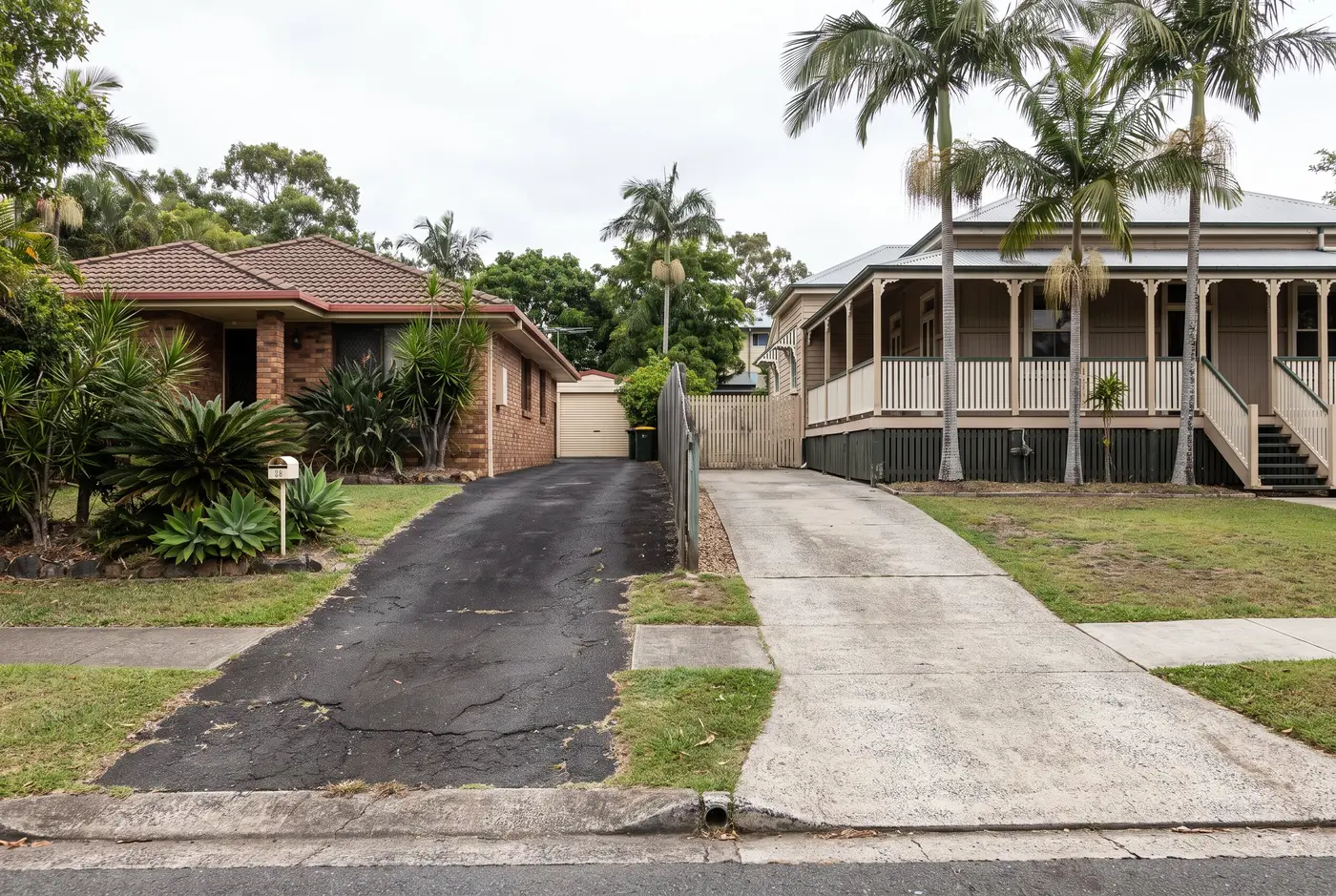
Bitumen installs faster, flexes with ground movement and is easier to patch, while concrete generally lasts longer and offers more design options. Which suits you best depends on budget, timeline and how much upkeep you want to do.
Choosing between bitumen and concrete is one of the first big decisions in any driveway project. Both are proven, widely used materials in Brisbane, but they behave differently and suit different priorities. Here is a straightforward comparison to help you weigh it up.
Bitumen driveways
Advantages
Bitumen, also called asphalt, is generally quicker and less expensive to install than concrete.
- Fast installation. A bitumen driveway can often be ready for use within a couple of days of laying, rather than the longer cure time concrete needs.
- Flexibility. Bitumen flexes rather than fractures with minor ground movement and temperature swings, which is a genuine advantage on Brisbane's reactive clay soils and through hot summers and heavy storms.
- Easy repairs. Small cracks and holes in bitumen are straightforward to patch, which keeps ongoing repair costs manageable.
Disadvantages
- Shorter lifespan than concrete. Bitumen typically needs resurfacing or resealing sooner than a well-maintained concrete slab.
- Regular maintenance. Periodic sealing helps protect the surface from UV exposure and rain. Skipping it lets the surface deteriorate faster.
- Fewer design options. Bitumen is functional and clean-looking, but it does not offer the colour and texture range that concrete does.
Concrete driveways
Advantages
- Long lifespan. A well-installed and maintained concrete driveway can last several decades.
- Lower ongoing maintenance. Concrete does not need regular resealing the way bitumen does, and it is less prone to surface wear from the elements.
- Design flexibility. Concrete can be coloured, stamped or textured to suit different aesthetic preferences, giving more scope to customise the look of your property.
- Higher load capacity. Concrete generally handles heavier and more frequent vehicle loads without the surface deforming.
Disadvantages
- Higher upfront cost. Concrete typically costs more to install than bitumen. Actual costs vary with size, finish and site access, so a quote is the only reliable way to know what your project will involve.
- Longer installation and cure time. Concrete can take the better part of a week to cure properly, during which the driveway cannot be used.
- More prone to visible cracking. Concrete is more likely to crack under significant ground movement, and once it does, repairs are more involved and harder to disguise than a bitumen patch.
- Staining. Concrete shows oil spills, tyre marks and other stains more readily than bitumen's dark surface.
Making the right choice for your property
The right driveway material depends on your budget, timeline, how the site behaves and how much upkeep you are willing to put in. Bitumen suits homeowners who want a fast, flexible, easily repaired surface, particularly where ground movement is a factor. Concrete suits those prioritising longevity and design flexibility and who are comfortable with a higher upfront cost and longer wait for installation.
Either way, the base preparation matters as much as the surface material. A driveway built on a poorly prepared base will underperform regardless of what goes on top.
Frequently asked questions
Which lasts longer, bitumen or concrete?
Concrete generally has the longer service life when properly installed and maintained, often outlasting bitumen by a decade or more. Bitumen still gives a solid 15 to 20 years with reasonable care, and it is quicker and cheaper to repair along the way.
Is bitumen or concrete better suited to Brisbane's climate?
Both work, but they respond differently. Bitumen's flexibility helps it cope with the ground movement common on Brisbane's reactive clay soils and the temperature range through the seasons. Concrete is more rigid, so it depends more heavily on solid base preparation and control joints to manage that same movement without cracking.
Can I switch from bitumen to concrete, or vice versa, when resurfacing?
Yes, though the existing surface and base usually need to be assessed first. A trip out to look at the site and the base condition is the best way to work out what is practical for your driveway.
Weighing up bitumen against concrete for your driveway? Get in touch for a free, no-obligation quote and we will help you work out what fits your property and budget.