
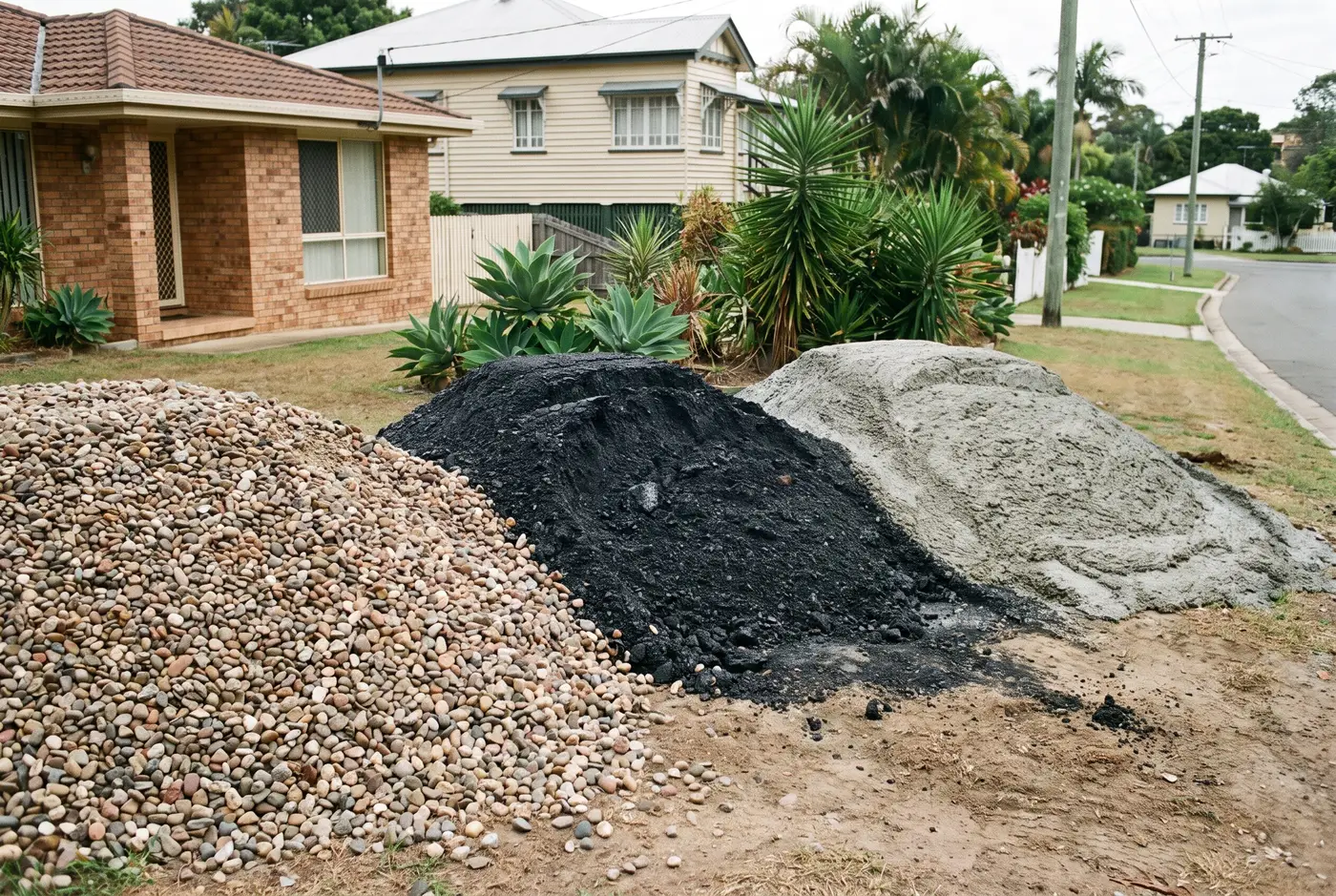
Bitumen sits at the more affordable end of driveway materials with moderate maintenance needs, while concrete and pavers cost more upfront but generally last longer. Actual pricing depends on your site, so get a quote to compare properly.
Choosing a driveway material means weighing up upfront cost against durability, maintenance and how the finished surface looks. Bitumen, concrete, gravel and pavers are the four options most Brisbane homeowners consider. Here is how they stack up against each other.
Installation cost
Costs vary considerably from job to job, driven by site access, ground preparation, drainage requirements and the size of the area, so treat the comparisons below as relative, not as a quote. The only reliable way to know what your project will cost is to have a look at the site.
Bitumen generally sits at the more affordable end of the market for driveway installation. The process involves preparing a sub-base, laying and compacting the bitumen mix, and finishing the surface.
Concrete typically costs more than bitumen to install, reflecting the materials, labour and curing time involved, and the price climbs further for coloured or exposed-aggregate finishes.
Gravel is usually the cheapest option upfront, with cost varying by the type and size of gravel used and how much sub-base preparation the site needs. It is worth weighing that lower upfront cost against the ongoing maintenance gravel demands.
Pavers tend to sit at the premium end, reflecting the cost of the pavers themselves, the labour-intensive laying process and base preparation. The finish is highly customisable, which is part of what drives the higher cost.
Maintenance and durability
Bitumen needs periodic resealing, commonly every few years, to protect against cracking and weather damage, and small cracks or early pothole signs are worth patching promptly. With reasonable care, a well-built bitumen driveway commonly lasts 15 to 20 years.
Concrete is durable and comparatively low-maintenance, often lasting 25 to 30 years or more when properly installed. When cracks do appear, though, they tend to be more involved and costly to repair than a bitumen patch.
Gravel needs the most hands-on upkeep of the four: regular raking, topping up loose stone, and dealing with weeds pushing through. It is cheap to start but the ongoing labour adds up.
Pavers are highly durable, with some installations lasting up to 50 years with minimal upkeep. Individual damaged or stained pavers can be replaced without redoing the whole surface, which makes long-term repairs relatively straightforward.
Aesthetic appeal
Bitumen offers a clean, smooth, functional look with limited colour or design variation. Concrete can be coloured, stamped or textured to mimic other materials. Gravel gives a rustic, natural look that suits acreage and semi-rural properties. Pavers offer the most design flexibility, with a wide range of colours, patterns and layouts available for a more custom finish.
Environmental impact
Bitumen production involves petroleum-based materials, but bitumen is highly recyclable, and old surfaces can be reprocessed into new paving. Concrete's manufacturing process is energy-intensive, though its long service life offsets some of that impact over time. Gravel is a low-impact natural material but can contribute to erosion and runoff if not properly contained. Pavers vary depending on the material, and permeable paver systems can help reduce stormwater runoff, a genuine consideration during Brisbane's wet season.
Weighing it all up
There is no single "cheapest" or "best" answer, it depends on your budget, how much ongoing maintenance you are willing to do, and how long you want the surface to last before major work is needed again. Bitumen is a solid middle-ground choice: reasonably priced, durable with regular care, and easy to patch if it does get damaged.
Frequently asked questions
Is bitumen cheaper than concrete for a driveway?
Bitumen is generally more affordable to install than concrete, though the exact gap depends on the site and finish. Concrete tends to need less frequent maintenance over its longer lifespan, so it is worth weighing upfront cost against long-term upkeep rather than comparing installation price alone.
Does gravel really work out cheaper in the long run?
Not always. Gravel has the lowest upfront cost of the four options but requires the most ongoing maintenance, regular raking, topping up and weed control, which adds time and cost over the years.
How do I get an accurate cost for my driveway?
Site conditions, access, drainage and the exact size of the area all affect price, so the only way to get an accurate figure is a site visit and quote.
Comparing materials for your next driveway project? Get in touch for a free, obligation-free quote and we will help you weigh up what suits your site and budget.