
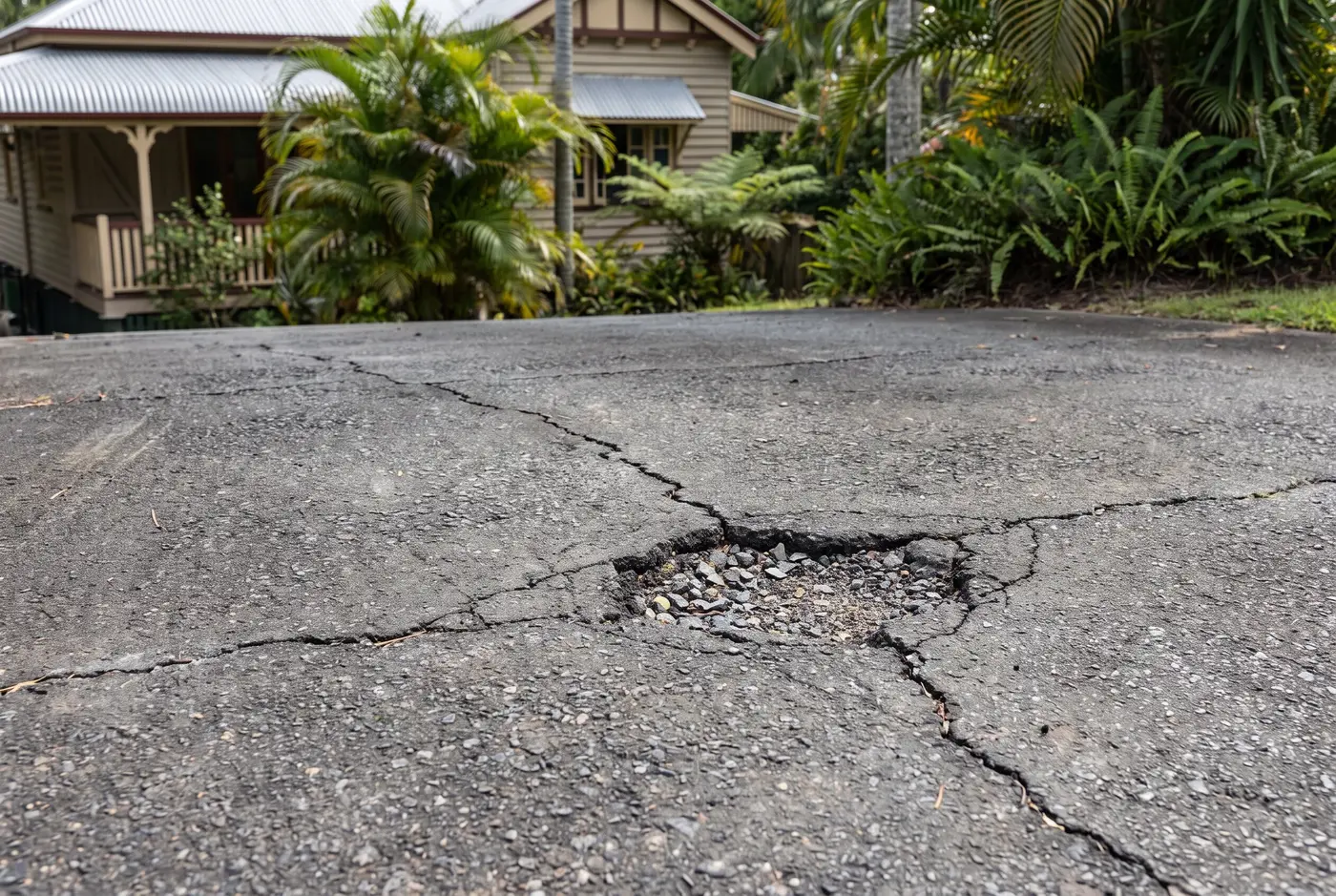
Cracks and potholes usually start small and worsen with water and traffic. Sealing narrow cracks early is a practical DIY step; larger damage or repeated potholes need a professional repair.
Bitumen driveways are common across Brisbane for good reason: they give a smooth finish and hold up well to local conditions. Over time, though, exposure to sun, rain, traffic and ground movement can lead to cracks or small potholes.
These early signs of damage often go unnoticed until they start affecting the look or stability of the driveway. Left untreated, minor defects can grow into larger areas of deterioration that need more involved repairs. Knowing how this damage develops helps you decide what is worth fixing yourself and when to call in a professional.
Why cracks form in bitumen
Cracks form when the bitumen surface, or the base underneath it, is exposed to more stress than the material can absorb. That stress builds gradually, weakening the structure until small defects appear and start to spread.
Common contributors in Brisbane include:
- Temperature swings between hot days and cooler nights
- Water entering the surface, particularly during storm season
- Tree root movement pushing up from below
- Heavy vehicle pressure over time
- Long periods of direct sun exposure
Once a crack develops, water can settle into it and speed up further deterioration, especially during Brisbane's wet season.
How potholes develop
Potholes usually start as a crack that was never repaired. Water gets in, reaches the base layer beneath the bitumen, and weakens the structure. Vehicles driving over the softened area push the material apart, and the surface gradually gives way.
Heavy rainfall speeds this process up considerably. Moisture trapped beneath the surface keeps the damaged section from drying out, letting the weak spot expand further. Once a pothole forms, the surrounding bitumen can start to break away too, widening the hole if it is not addressed.
Repairing small cracks
Narrow cracks, caught early, are often suitable for simple maintenance. The typical process is to clean out the crack, make sure the area is dry, apply a suitable crack sealant, and smooth it for an even finish.
This works best where the base beneath the crack is still stable. Sealing early stops water from getting in and helps prevent the crack widening, and it is a sensible step after long periods of sun exposure when surface wear becomes more visible. It will not fix a deeper structural problem, but it does reduce the chance of a bigger repair being needed later.
Repairing larger cracks and potholes
Bigger cracks and potholes need a more thorough repair. That typically starts with cutting out the damaged section and clearing away loose or weakened material to create a stable base to work from.
If the base layer has deteriorated, it may need rebuilding before new bitumen goes down. Hot or cold mix bitumen is then applied to the prepared area and compacted to form a level, stable surface. Getting the compaction and material selection right matters for how well the repair holds up, particularly through Brisbane's heavy rain and regular traffic.
When to call a professional
Some driveway issues are not suited to a DIY fix. Multiple potholes, spreading cracks, drainage problems or uneven sections usually point to a deeper structural issue that needs a professional assessment.
A qualified contractor has the tools and experience to work out the right fix, whether that is a simple patch, a partial reconstruction, or resurfacing the whole area. Proper machinery means correct compaction and even material application, which matters for how long the repair actually lasts.
Preventing future damage
A few consistent habits reduce the risk of cracks and potholes coming back:
- Cleaning the driveway regularly to clear debris
- Managing drainage so water is not pooling anywhere
- Applying a protective seal every few years
- Repairing small cracks before they have a chance to spread
These steps protect the surface from moisture and wear, and regular checks let you catch early signs of damage before they turn into a bigger job.
Frequently asked questions
What causes cracks in a bitumen driveway?
Temperature changes, water entering the surface, vehicle pressure and tree roots are the most common contributors.
Can small cracks be repaired at home?
Yes. Narrow cracks can often be sealed yourself if the base beneath them is still stable.
How do potholes form in a driveway?
They typically start when water reaches the base layer through an existing crack, weakening the surface until it collapses under vehicle weight.
Does Brisbane's weather affect driveway damage?
Yes. Heavy rain and long periods of sun exposure both speed up cracking and pothole formation.
Cracks and potholes are common in bitumen driveways, but repairing them early and keeping up basic maintenance goes a long way towards keeping the surface stable. For a professional repair assessment across Brisbane, enquire online.