
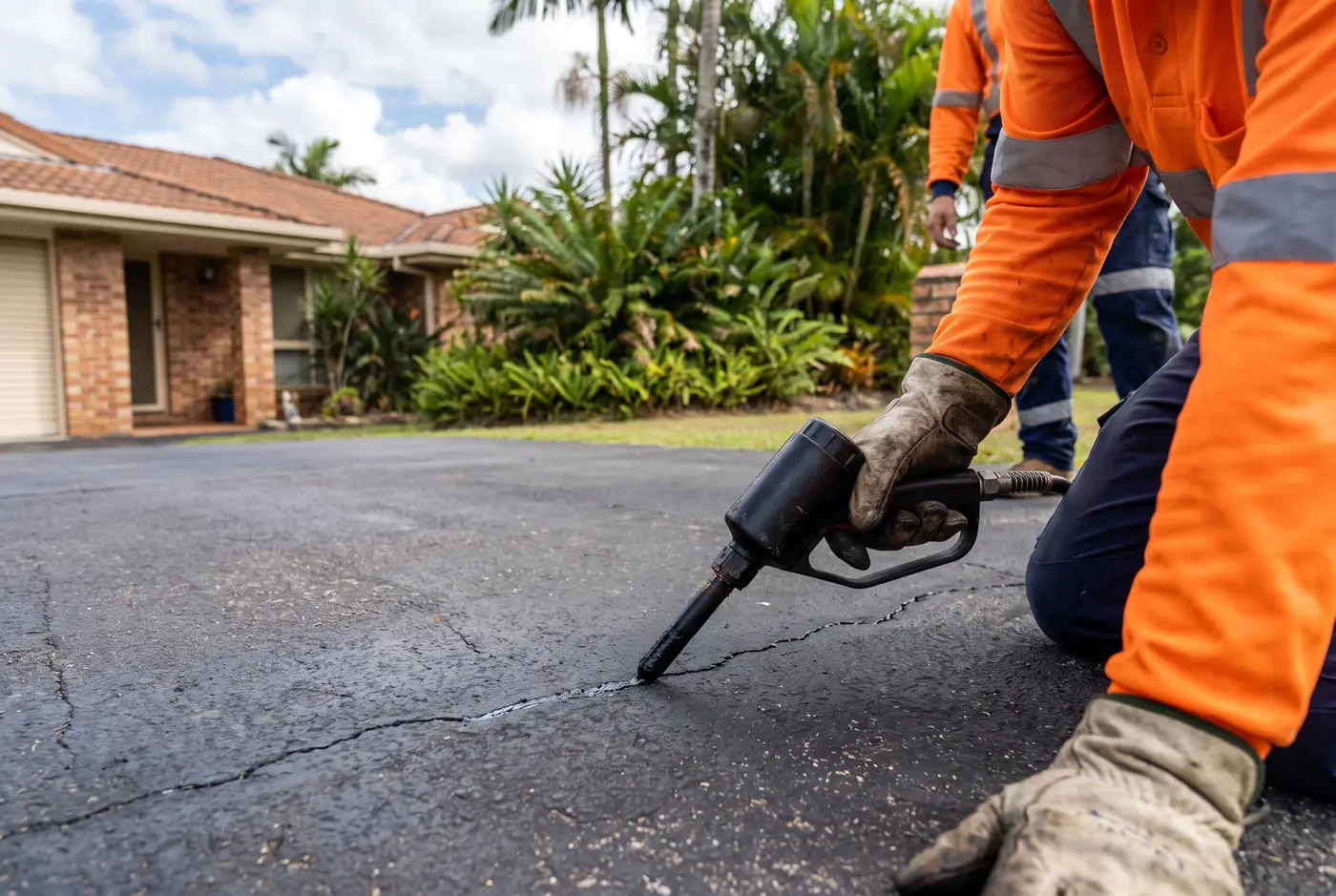
Regular seasonal checks, cleaning, resealing and prompt crack repair prevent the water damage that eventually forces a full driveway replacement.
Driveway surfaces degrade over time due to vehicle traffic, weather exposure, moisture and contaminants. Cracks, surface wear and edge breakdown are early signs of damage that often go unnoticed or untreated. If these issues aren't addressed, water can enter the surface and weaken the base, which may result in potholes, surface lifting or structural failure. When damage reaches this stage, full replacement is often required, and that's significantly more expensive than early maintenance.
This guide covers practical driveway maintenance and repair steps for bitumen, asphalt and concrete surfaces: inspection, cleaning, sealing, crack repair, drainage control and when to seek professional advice.
Check for damage each season
Seasonal checks help you catch surface issues before they get worse. Temperature swings, rain and sun all affect surface stability, and a short inspection every few months can save you from a much larger repair job later.
In summer, bitumen driveways are more likely to soften or show indentations from parked vehicles. In winter, watch for fine cracks caused by thermal movement, especially on concrete. After heavy rain, check for pooling water at the edges or signs of base erosion. Early warning signs include dark patches, loose gravel or raised edges where sections have lifted.
Most minor defects can be managed with simple maintenance if caught early. Any part of the driveway that looks uneven, discoloured, or stays damp longer than the rest of the surface may point to a deeper issue. A quick seasonal check, with a few photos for your own record, makes it easier to plan repairs and explain issues if you bring in a professional.
Clean the surface to limit wear
Regular cleaning removes debris that can lead to surface breakdown. Oil, leaves and dirt hold moisture and heat, which softens bitumen and stains concrete, while tyre pressure pushes grit into cracks and speeds up erosion.
Sweep the surface weekly to clear leaves and gravel and stop buildup in joints or between slabs. Once a month, use a pressure washer to remove stains, and a mild detergent or degreaser for oil patches, especially near garage entries. Avoid bleach or strong acids, which can damage a bitumen surface.
Dark stains that won't wash off can be a sign the seal layer has worn away, leaving that area more vulnerable to water damage and worth marking for resealing. Extend your cleaning to the edges of the driveway too, to stop weeds or moss spreading across joins. Most surface problems start with neglected grime and water pooling in low spots.
Reseal the surface to prevent cracking
Sealing adds a protective barrier against water, UV exposure and general wear. Without it, moisture can seep through hairline cracks and weaken the surface underneath. For bitumen and asphalt, resealing every 2 to 4 years helps prevent brittleness. Concrete driveways can also benefit from sealing, particularly if they're exposed to harsh sun or chemicals.
Signs it's time to reseal include faded colour, water soaking in rather than beading, or a surface that feels rough or powdery. Resealing early reduces the risk of cracks, stains and surface lifting later on.
Choose a sealer suited to your surface type, bitumen sealers and concrete coatings aren't interchangeable. Apply in dry conditions and follow the product's drying times, two thin coats are usually more effective than one thick layer. Skipping sealing means any driveway repair work done later is unlikely to last as long.
Repair small cracks before they widen
Surface cracks grow if they're left alone. Water enters through the gaps, softens the foundation beneath, and eventually leads to potholes. Small cracks can look purely cosmetic but often expand due to heat, pressure or moisture buildup.
Start by clearing debris from each crack with a wire brush or blower. For narrow gaps, apply a crack filler or liquid sealant; larger breaks may need cold mix asphalt or a patching compound. Compact the repair so it sits level with the rest of the surface, and avoid overfilling or leaving raised patches, which can break down under tyre pressure.
Monitor filled areas over time, particularly through wet seasons. Repairing early often stops further damage without the need for full resurfacing. If you're unsure how deep a crack goes, it's safer to get a professional opinion before sealing it in.
Control drainage and tree root pressure
Water and roots cause damage from below the surface. Poor drainage washes out the base, while tree roots lift or crack sections over time, and both issues often go unnoticed until major repair is needed.
Check how water flows during heavy rain, it should move away from the driveway, not pool or run toward it. If you see regular pooling, consider a channel drain, grate or trench to redirect the flow, and make sure garden beds and lawn edging aren't pushing water back onto the surface.
Tree roots are another common cause of lifting or slab separation. Avoid planting trees with aggressive root systems, such as bottlebrush or fig, too close to the driveway. If roots are already visible, talk to a contractor about barrier installation or minor root trimming rather than cutting large roots without advice, which can harm the tree or destabilise the surface. Once cracking or lifting begins from below, surface patching alone won't hold for long.
Decide between resurfacing or full replacement
If your driveway shows widespread but shallow wear, resurfacing may extend its life. This involves applying a new top layer over a stable base, and it's less disruptive and less costly than full replacement, provided the sub-base is intact.
Resurfacing suits a driveway where cracks are shallow, the surface is mostly even, and the foundation still supports vehicle load. Replacement is the better option where the foundation is soft, uneven or eroding, shown by frequent cracking, sections that flex under weight, or potholes that keep reappearing after patching.
A contractor can confirm whether resurfacing is enough or whether a rebuild is the safer long-term solution.
When to call a professional
Some surface issues can be fixed without help, but not every driveway problem should be handled without the right tools or experience. Uneven areas, drainage issues or signs of base erosion can point to deeper faults that need a professional assessment.
In Brisbane and South-East Queensland, soil movement and heavy rainfall affect how bitumen and concrete surfaces perform over time. A contractor can work out whether damage is limited to the surface or whether the base has shifted, and recommend the right fix, whether that's sealing, patching, resurfacing or full reconstruction. For expert support with bitumen driveways in Brisbane, work with a contractor who understands local soil and weather conditions.
Protect your driveway from larger repairs
Ongoing maintenance prevents small issues from becoming costly ones. Checking for seasonal changes, managing drainage and sealing at the right intervals all reduce the chance of major failures, and cleaning or patching early limits the need for larger repair work down the track.
If your surface is already showing signs of wear, whether that's a cracked section, a drainage issue or a soft spot from heavy traffic, early driveway repair is far more effective than waiting. Get in touch for a free quote for advice and reliable service on bitumen, asphalt or concrete repairs.
Frequently asked questions
How long does a bitumen driveway last?
A well-installed bitumen driveway typically lasts 15 to 20 years. Lifespan depends on surface thickness, traffic load and site drainage. Surfaces exposed to heavy vehicles or intense heat may need resurfacing sooner if cracks or soft spots aren't addressed early, and sealing every 2 to 3 years helps reduce wear.
Is driveway sealer necessary for long-term durability?
Yes. Sealing protects against water, UV exposure and general surface wear. Bitumen and asphalt should be sealed every 2 to 4 years, while concrete may need it less often depending on exposure.
Can I repair cracks in my driveway myself?
Small cracks can be filled with a crack sealer or cold patch compound. For deep or wide cracks, or if you notice sections lifting or sinking, it's best to bring in a professional.
What causes potholes to form in driveways?
Water entering through cracks or worn sections weakens the base. As vehicles pass over the area, the surface collapses. Poor drainage or inadequate compaction speeds up pothole formation.
How do I know if resurfacing is enough?
If the surface is cracked but level and the base is solid, resurfacing may be suitable. If there's flexing, soft spots or base damage, full replacement is often required.