
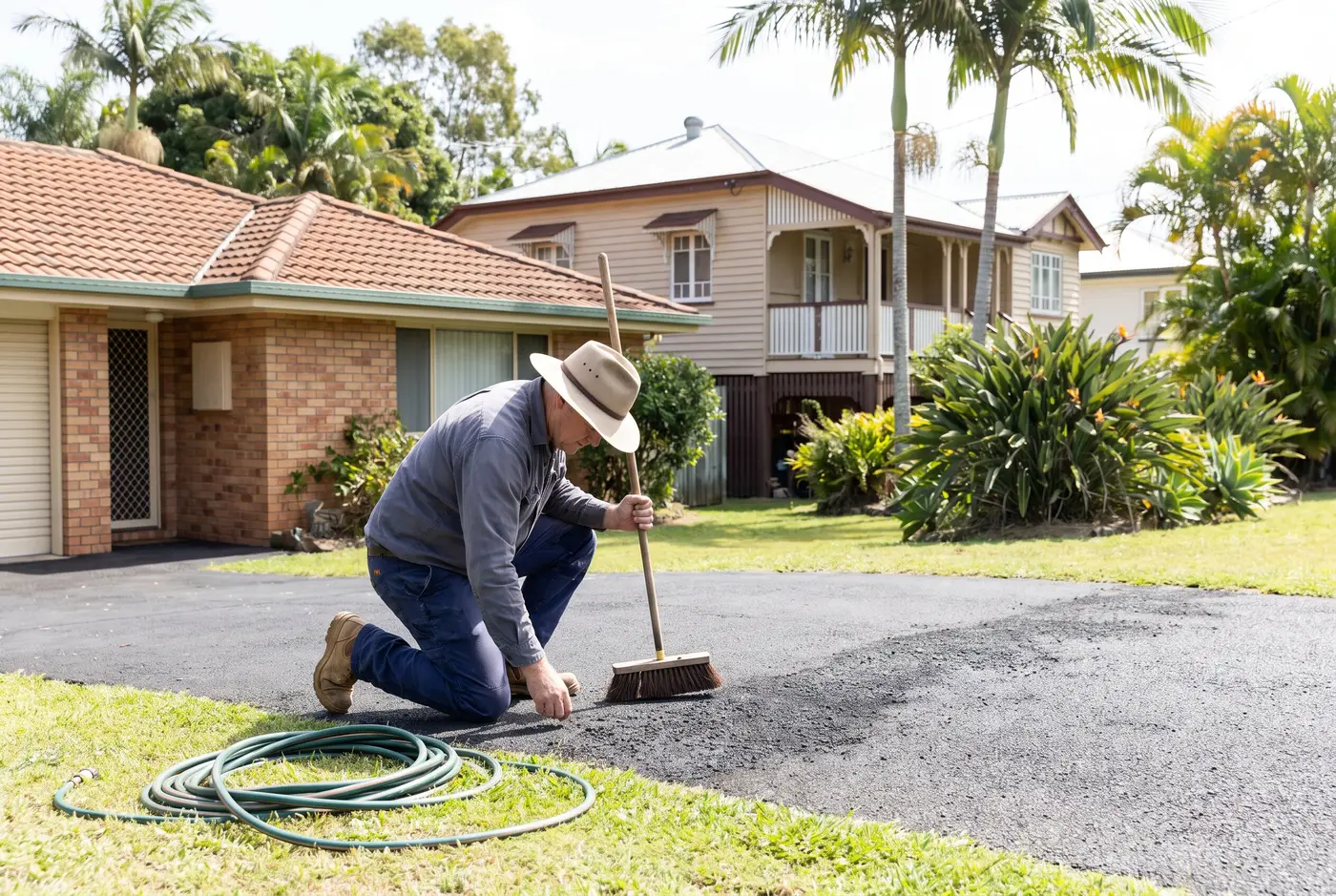
Regular inspection, cleaning, drainage checks and timely resealing are the core habits that keep a bitumen driveway performing well through South-East Queensland's climate.
Maintaining a bitumen driveway is one of the best ways to protect your home's value and keep your property looking sharp. With South-East Queensland's mix of hot sun, heavy rain and humidity, bitumen surfaces need consistent care to stay strong and long-lasting. This guide gives you a clear, practical approach to keeping your driveway in top shape.
Regular inspection and early detection
Regular inspection is one of the most important parts of driveway upkeep. A quick walk-around every week or so helps you spot early signs of wear, such as cracks, small splits, stains or soft spots. Even tiny imperfections can grow quickly in Queensland's weather.
Sun exposure causes fading and brittleness, while rapid weather changes can widen hairline cracks. Catching these issues early means easier, faster and less costly fixes. After storms or heavy rain, it's worth taking another look at the surface, weather events can accelerate deterioration, especially where water has nowhere to drain.
Cleaning, clearing and keeping the surface healthy
A clean driveway lasts longer. Removing leaves, grit and debris helps prevent moisture buildup and makes it easier to spot problems early. Simple sweeping or rinsing makes a real difference over time.
Overgrown edges or creeping plants can undermine the structure of your driveway. Trimming back grass and vegetation reduces pressure on the edges and stops roots causing damage. Oil and chemical spills should be cleaned up as quickly as possible, petrol, oils and solvents can weaken the bitumen binder and cause permanent surface damage if left untreated.
Managing drainage and preventing water damage
Water is one of the biggest contributors to bitumen deterioration. Proper drainage helps prevent soft spots, sinking areas or cracks caused by trapped moisture. Pooling water is a warning sign worth acting on, left too long, it can weaken the base layer and lead to costly structural repairs.
After heavy rainfall, take time to inspect the driveway for new damage. Seasonal wet weather in South-East Queensland often reveals issues before they escalate further.
Repairing, resealing and strengthening the surface
Addressing small cracks early is one of the smartest maintenance steps you can take. Cleaning and sealing them stops water getting in and prevents the crack widening further.
Resealing your driveway every few years protects it from UV, rain and heat, and keeps the bitumen strong and flexible while improving its appearance. When you start noticing widespread cracking or a chalky, faded surface, resurfacing may be the better long-term fix, restoring the driveway's strength and delaying the need for full replacement.
Long-term care for a longer-lasting driveway
Avoid leaving heavy vehicles or trailers parked in one spot for extended periods, continuous pressure can create dents or soft patches over time. Minimise tight, fast tyre turns, especially in warm weather when bitumen softens slightly, gentle driving habits help the surface hold its shape.
Keeping the surrounding area clear helps too. Storing materials, equipment or machinery on the driveway for long periods traps heat and moisture and speeds up wear. Keeping a simple record of your maintenance checks, repairs and sealing dates is a useful habit that keeps your upkeep organised and protects your long-term investment.
When you notice major structural issues, drainage problems or widespread damage, it's best to bring in a professional who can assess the problem accurately and recommend a durable fix.
Quick maintenance checklist
- Inspect the driveway regularly for cracks, fading or soft spots
- Keep the surface clean and manage surrounding vegetation
- Ensure proper drainage and watch for pooling water
- Repair cracks early and reseal as needed
- Avoid heavy or prolonged vehicle loads
- Maintain good driving habits to prevent scuffing
- Call in professionals for major or structural issues
A well-maintained bitumen driveway in South-East Queensland stays attractive, durable and safe for many years. With consistent care and the occasional professional check, you protect your property and avoid costly repair work down the track. For expert repairs, sealing and resurfacing, get in touch for a free quote.
Frequently asked questions
How often should I inspect my bitumen driveway?
A quick weekly inspection is ideal, especially after rain or storms.
When should I reseal a bitumen driveway?
Roughly every 3 to 5 years, depending on weather exposure and surface wear.
What causes most cracks in bitumen driveways?
UV exposure, heat, moisture, heavy loads and natural ageing are the most common causes.
Can I repair small cracks myself?
Yes, minor cracks can often be filled with bitumen-compatible repair products.
Why is driveway drainage so important?
Good drainage prevents pooling water, which weakens the bitumen base from below.
When should I call a driveway professional?
Seek expert help for major cracking, sinking, drainage issues or widespread damage.