
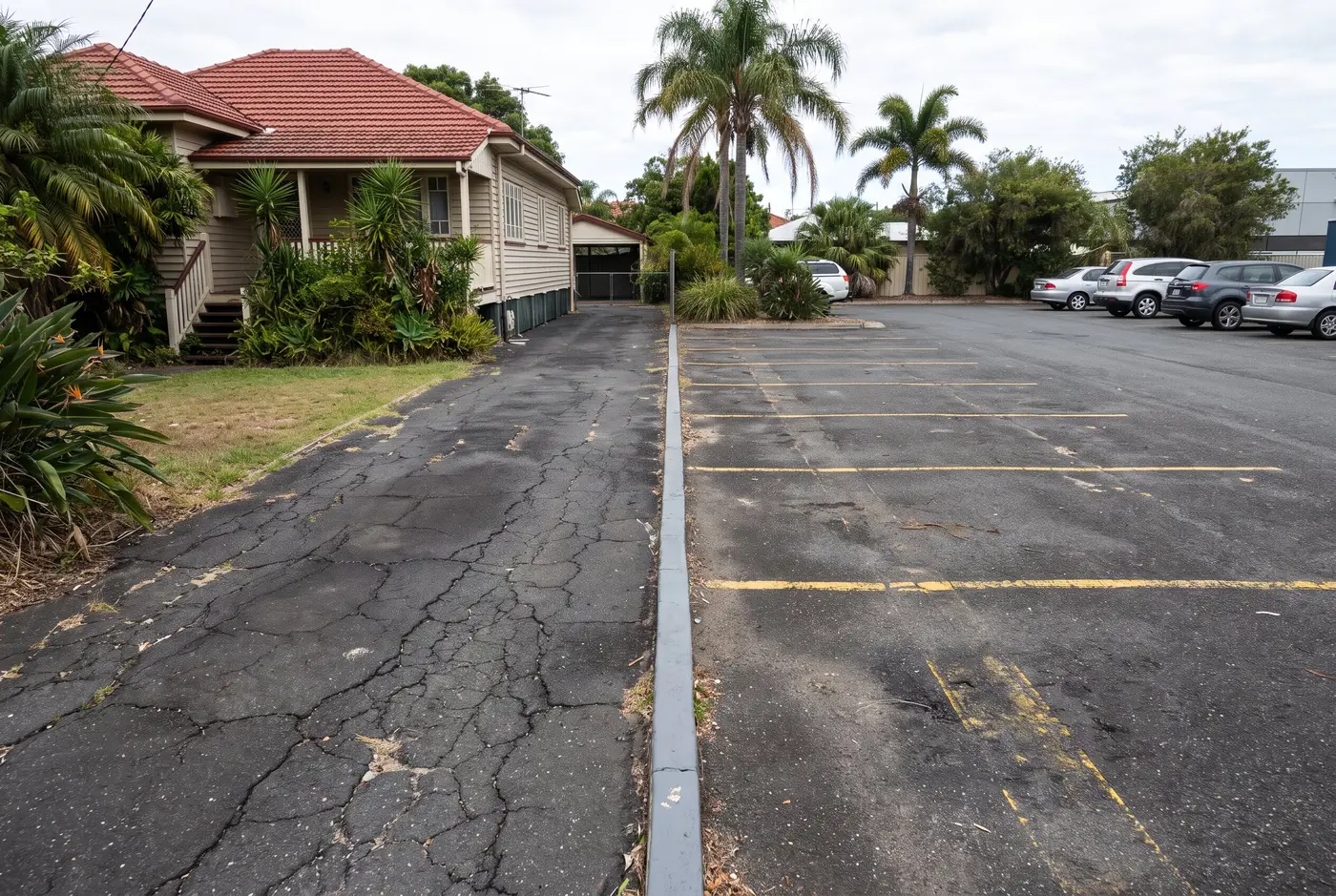
Residential bitumen work is smaller-scale and finish-focused, while commercial surfacing needs denser mixes, thicker bases and more rigorous engineering to handle heavy, frequent traffic.
Bitumen surfacing is widely used across both residential and commercial properties in Brisbane, valued for its durability and relatively low upkeep. But a home driveway and a commercial car park or industrial yard are built to very different standards. Here is what sets them apart.
Scope and scale
Residential bitumen work typically covers driveways, pathways and small private roads. The priorities are usually aesthetic fit with the home, a smooth and safe surface, and minimal disruption during installation. These projects are generally smaller and less complex, needing less heavy machinery.
Commercial bitumen surfacing covers much larger areas: car parks, access roads, industrial estate surfaces and similar. These jobs demand more planning, heavier machinery and engineering that accounts for constant heavy traffic and greater wear over time.
Material specification
Residential bitumen mixes are typically less dense than commercial-grade material, since they are not carrying the same load or traffic volume. Additives for appearance, such as coloured aggregates, are more common in residential work where finish matters.
Commercial applications need high-density mixes engineered to withstand heavy, frequent traffic. Polymer additives and other strengthening agents are common to improve durability and resistance to rutting and deformation, and the mix has to meet relevant industry specifications for the expected load.
Load-bearing capacity
Residential surfaces are designed for light to moderate loads, mainly passenger vehicles, so the sub-base and base layers are generally thinner than commercial builds.
Commercial surfaces need to handle heavy, frequent loads from trucks, delivery vehicles and machinery. That means a thicker base and sub-base, along with proper engineering around traffic flow and load distribution to keep the surface performing under sustained heavy use.
Maintenance and lifespan
Residential bitumen surfaces need fairly straightforward upkeep: regular cleaning, periodic sealing and patching small cracks as they appear. A well-built residential driveway commonly lasts 15 to 20 years with reasonable care.
Commercial surfaces face a tougher maintenance schedule given the volume and weight of traffic, including regular inspection, resurfacing and prompt repair of damage. Because of the heavier use, commercial surfacing often needs attention sooner than a residential driveway, so a proactive maintenance plan matters more.
Cost considerations
Residential jobs are generally a smaller investment, reflecting the smaller area and lighter-duty materials, though ongoing maintenance still needs to be budgeted for. Commercial surfacing represents a bigger upfront investment, given the scale, higher-spec materials and more involved installation process, but that investment is what allows the surface to handle demanding conditions and reduce the frequency of costly repairs and replacement down the track. Costs on both sides vary with site conditions and scope, so a proper quote is the only way to know what a specific job will involve.
Choosing the right specification for your site
Whether you need a home driveway or a full commercial car park, choosing the right bitumen surfacing for the job comes down to matching the mix, base depth and engineering to the traffic the surface will actually carry. Getting that specification right at the outset is what keeps the surface performing for its expected lifespan rather than failing early.
Frequently asked questions
Can the same bitumen mix be used for a driveway and a commercial car park?
No, not really. Commercial applications need a denser, more heavily engineered mix designed for sustained heavy traffic, while residential mixes are built for lighter, less frequent loads. Using a residential-grade mix on a commercial site would wear out far faster than expected.
Does commercial bitumen surfacing really wear out faster than residential?
It often needs attention sooner simply because it carries much heavier and more frequent traffic, not because the material itself is inferior. A well-specified and maintained commercial surface still performs reliably, it just needs a more proactive maintenance schedule.
How do I know which specification my project needs?
It comes down to the expected traffic: passenger vehicles only versus trucks, machinery or frequent heavy loads. A site assessment is the best way to confirm the right base depth and mix for your project.
Whether it is a home driveway or a commercial surfacing project, get in touch for a free quote and we will help you work out the right specification for your site.