
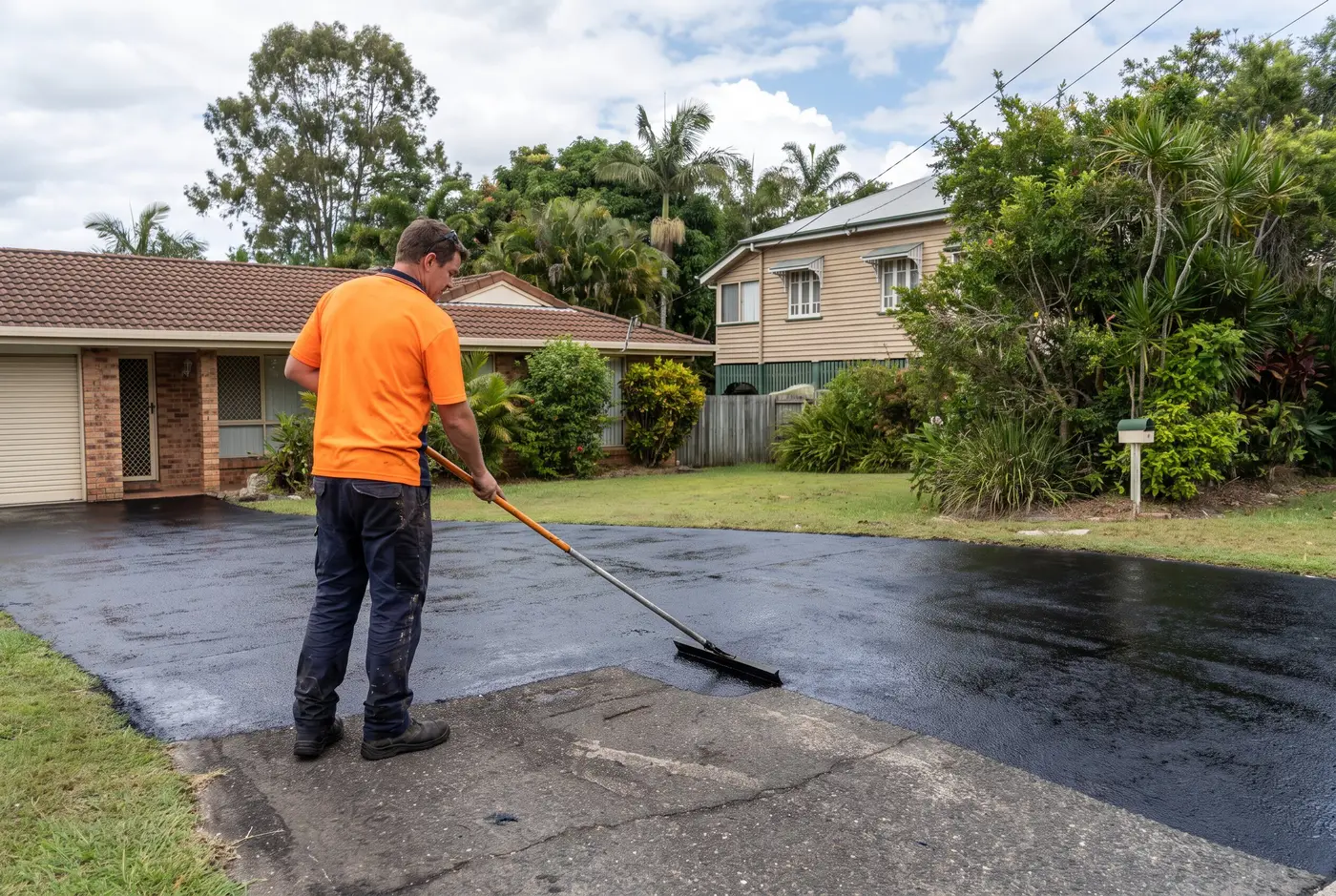
Seal coating adds a thin protective layer over a bitumen driveway to slow down sun, moisture and wear damage. Done well, it involves cleaning, repairing cracks, protecting edges, applying the coating, and allowing it to cure properly before use.
A bitumen driveway can stay in good condition for many years, but Brisbane's subtropical climate puts it to the test. Strong UV, heavy summer storms and long dry spells all take a toll on the surface, and without protection the bitumen gradually fades, hardens and starts to crack.
Seal coating is one of the simplest ways to slow that process down. It will not fix structural problems, but applied at the right time and over a sound base, it protects the surface, refreshes its appearance and helps delay the need for bigger repairs.
Why seal coating matters
Seal coating adds a thin protective barrier over a bitumen driveway, reducing how much sunlight, moisture and surface movement reach the bitumen underneath. Over time this helps with:
- Slowing fading and oxidation from UV exposure
- Reducing water penetration during Brisbane's wet season storms
- Limiting the small surface cracks that eventually turn into potholes
- Keeping the driveway looking consistent from edge to edge
Applied at sensible intervals, a seal coat is cheap insurance against the weather Brisbane driveways deal with every year.
Preparing the surface
A clean, dry surface is what allows a seal coat to bond properly. Loose material, dust, moss and built-up grime all interfere with adhesion, and driveways under trees or in shaded, damp corners of the yard collect this faster than open, sun-exposed areas.
Preparation typically covers:
- Removing loose debris and vegetation from the surface and edges
- Sweeping or blowing off dust and grit
- Pressure cleaning where oil stains, mould or algae have built up
Skipping this step is one of the more common reasons a seal coat fails early or wears unevenly.
Repairing damage before sealing
A seal coat sits on top of the bitumen. It cannot fix a cracked or crumbling base, and any damage left underneath will keep spreading once it is sealed over. That is why cracks, shallow potholes and soft spots need attention first.
Typical repair work includes:
- Cleaning out cracks and filling them with a suitable sealant
- Patching shallow potholes with compacted base material and fresh bitumen
- Reinforcing weak edges before they break down further
Getting this right first gives the coating a stable, even surface to bond to.
Protecting surrounding areas
Before coating starts, nearby paths, garden beds, retaining walls and kerbs are usually protected with tape, boards or temporary barriers. This keeps the sealant contained to the driveway and avoids stray marks on brickwork or paving that are annoying to clean up afterwards.
Applying the seal coat
The coating itself is spread using brushes, squeegees or sprayers depending on the size and layout of the driveway. Weather plays a real role here: mild, dry conditions support an even cure, while Brisbane's humidity or an unexpected downpour can affect how the coating sets. A steady, even application gives the best finish and the longest-lasting protection.
Curing and drying
Once applied, the coating needs time to cure before the driveway goes back into full use. Depending on temperature, shade and airflow, this can take anywhere from several hours to a full day. During this time:
- Vehicles should stay off the driveway
- Foot traffic should be kept to a minimum
- Shaded sections may need longer than sun-exposed areas
Rushing this stage is a common cause of an uneven or short-lived finish.
Maintenance between coatings
Even with a fresh seal coat, a driveway still needs some ongoing attention. Simple habits go a long way:
- Sweeping off dirt, leaves and organic debris regularly
- Cleaning up oil or fuel spills promptly
- Checking for small cracks or early wear after storm season
- Repairing minor issues as soon as they appear, rather than waiting
Combined with periodic seal coating, this kind of maintenance is what keeps a bitumen driveway performing well through Brisbane's heat, humidity and heavy rain.
Frequently asked questions
What does seal coating actually do for a driveway?
It adds a protective layer that reduces damage from sunlight, moisture and everyday surface wear, helping the bitumen underneath last longer.
How often should a bitumen driveway be sealed in Brisbane?
It varies with sun exposure, tree cover and how much the driveway is used, but many Brisbane driveways benefit from resealing every few years given the intensity of the local climate.
Do cracks need to be repaired before sealing?
Yes. Sealing over unrepaired cracks lets moisture keep working underneath the coating, so cracks and soft spots should be fixed first.
How long does a seal coat take to dry?
Anywhere from several hours to a full day, depending on temperature, humidity, shade and airflow.
Is seal coating worth doing on an older driveway?
Generally yes, provided any structural issues are repaired first so the coating has a sound surface to bond to.
If you want to understand the difference a proper two-coat seal treatment makes, it is worth reading up before you commit to a job.
If your driveway is due for a seal coat or you are not sure what condition it is in, get in touch for honest advice on what your surface actually needs.