
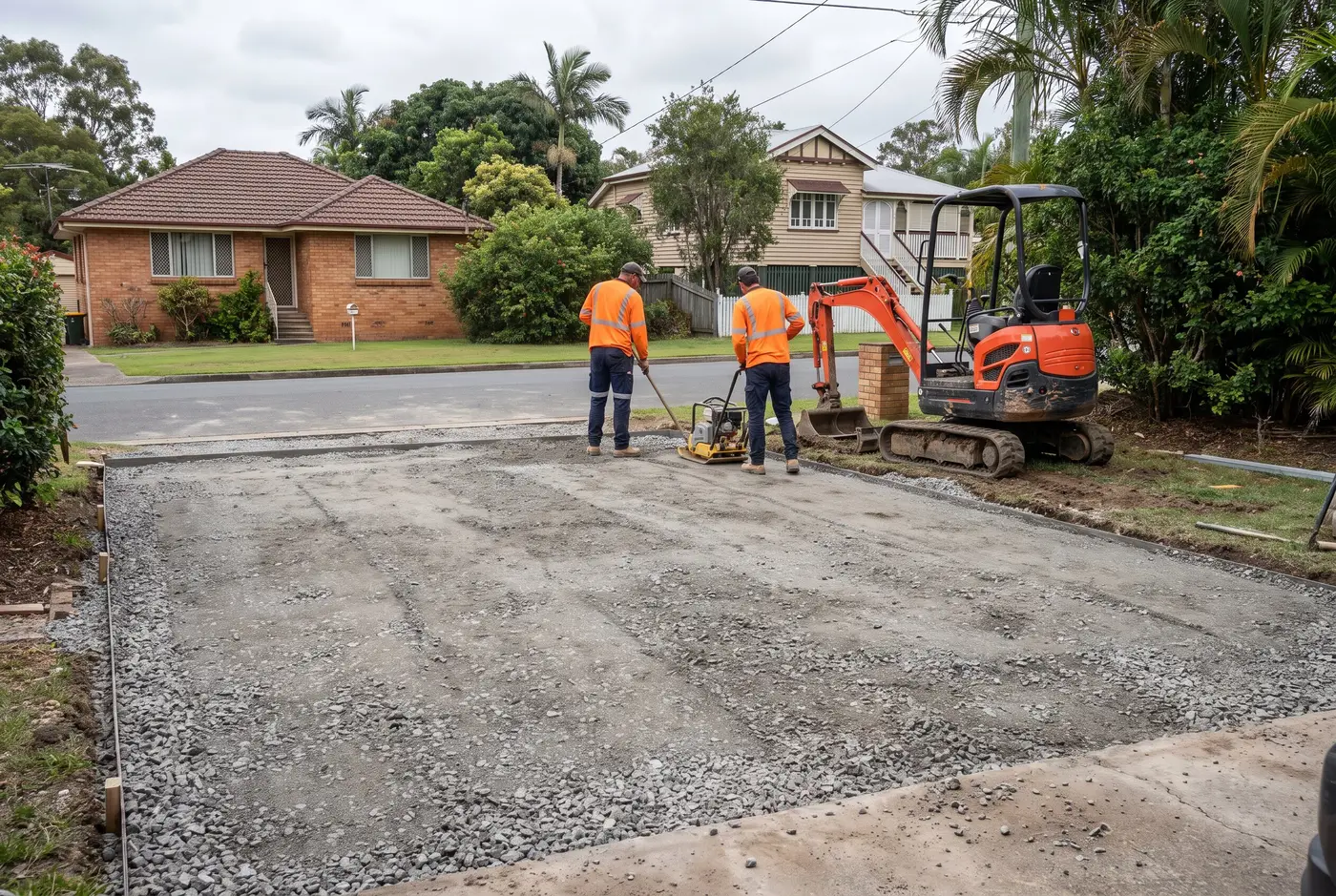
A good bitumen driveway starts well before the bitumen arrives, with a proper site assessment, clearing, grading and a well compacted base. Skipping these steps is the most common cause of early cracking.
Installing a bitumen driveway can genuinely lift both the function and the look of a property, but the finished surface is only as good as the preparation underneath it. Most driveway failures trace back to something that went wrong before the bitumen was even laid, not the bitumen itself.
Here is what proper preparation actually involves.
Assessing your property
Before anything else, the site needs a proper assessment. That means looking at soil type, existing drainage patterns and any structures near the proposed driveway. Brisbane's reactive clay soils in particular can shift with moisture, so if your property already shows signs of erosion, pooling water or uneven ground, these issues need addressing before installation, not after.
A professional site assessment picks up problems early and lets the installer plan around them rather than working around surprises mid-job.
Planning and design
With the site understood, the next step is working out the driveway's dimensions and layout, factoring in slope, how vehicles will actually use it, and where it connects to the road or existing paths. If you are unsure what will work best, talking with a driveway contractor before finalising the design is worth doing. They can flag drainage or access issues you might not spot yourself.
Clearing the area
Once the design is settled, the site needs clearing: existing pavement, vegetation and debris all have to go. Trees and large shrubs may need removal, and any old asphalt or concrete has to be excavated out completely. Roots and organic material left behind will decompose over time and undermine the new surface, so this step needs to be thorough, not rushed.
Excavation and grading
Correct excavation depth allows room for both the base layer and the bitumen itself. Grading is where the site is levelled and sloped to direct water away from the house and any low points, which matters a great deal given how much rain Brisbane can get in a short burst during storm season. A well-graded base is the difference between a driveway that sheds water properly and one that pools and deteriorates within a few years.
Installing the base layer
The base layer, typically crushed stone or compacted gravel, is what gives the driveway its structural strength. It needs to be compacted firmly to prevent settling or shifting later on. How thick this layer needs to be depends on the soil underneath and how much traffic the driveway will carry, heavier vehicles generally call for a stronger base.
Preparing for bitumen application
Before bitumen goes down, the base needs to be clean, dry and free of loose material. Any cracks or soft spots in the base should be fixed at this point, since problems here will show up in the finished surface later. This is the last real opportunity to correct anything before the bitumen is applied.
Bitumen installation
Hot bitumen is spread evenly across the prepared base and compacted to create a smooth, durable finish. Getting the thickness and compaction right is a job for an experienced installer, since uneven application is one of the more common causes of early wear.
Curing and early maintenance
After installation, the driveway needs time to cure, generally several days, during which it should be left undisturbed so it can set and harden properly. Once cured, ongoing maintenance such as periodic sealing and regular cleaning helps protect the surface and extend its working life well beyond the first few years.
Frequently asked questions
How long does site preparation take before bitumen can be laid?
It varies with site conditions, but clearing, grading and base compaction typically take longer than the bitumen application itself. A contractor can give you a realistic timeframe once they have assessed the site.
Do I need to remove all existing vegetation myself?
Not necessarily. Many contractors handle clearing as part of the job, though large trees may need separate arrangements depending on council requirements.
Why does the base layer matter so much?
The base carries the structural load and drainage function of the whole driveway. A poorly compacted base is the most common reason bitumen cracks or settles unevenly within the first few years.
How soon can I drive on a new bitumen driveway?
Curing generally takes several days, and the driveway should be left undisturbed during that time. Your installer will confirm timing based on weather and conditions on the day.
If you are planning a new driveway and want help getting the preparation right from the start, get in touch to talk through your site.