
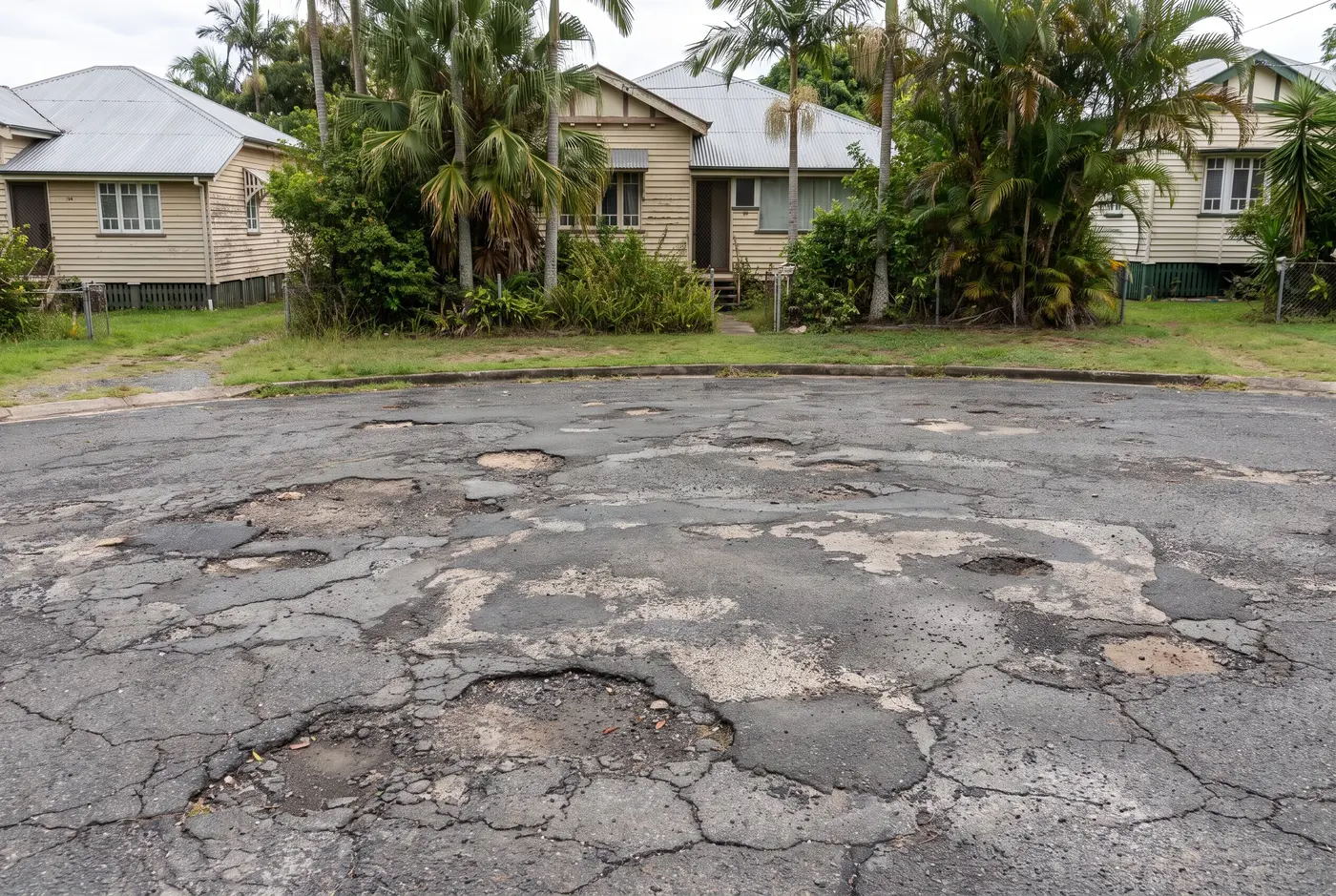
Watch for cracking, potholes, surface erosion, fading and pooling water. Catching these early, especially before Brisbane's summer storm season, keeps small repairs cheap and stops bigger structural damage.
Bitumen driveways are popular across Brisbane for good reason: they are durable and cost-effective. But no surface lasts forever untouched, and Brisbane's mix of intense UV, heavy summer storms and reactive clay soils can accelerate wear. Spotting the early warning signs saves money and stops small problems turning into expensive ones.
Cracks and fissures
Cracking is usually the first visible sign that a driveway needs attention.
Hairline cracks
These are minor on their own, but if left alone they let water into the base layer, which speeds up further damage. A crack sealed early is a five-minute job. Left through a wet season, it can turn into a much bigger repair.
Alligator cracking
Cracking that resembles an alligator's skin points to a weakened base or subbase rather than just surface wear. This usually needs proper patching or, in bad cases, reclaiming that section of the driveway down to the base.
Potholes
Potholes form when water gets into cracks, softens the base underneath, and the surface eventually breaks apart under vehicle weight. They are a tripping and vehicle hazard as well as an eyesore, and Brisbane's heavy summer storms can turn a neglected crack into a pothole quickly. Addressing cracks before they reach this stage is far cheaper than pothole repair.
Surface erosion
Loose gravel, rough patches or visibly worn areas point to surface erosion, usually driven by a combination of heavy rain, wind and Queensland's strong UV exposure. Over time these elements break down the bitumen binder, loosening the aggregate underneath. Periodic seal coating helps protect the surface against this kind of wear.
Fading and discolouration
New bitumen has a rich black finish that fades to grey as it ages and oxidises under sun exposure. Fading is not just cosmetic, it is a sign the surface is becoming more brittle and more prone to cracking. A seal coat restores both the look and the protective layer.
Drainage issues
Water pooling on the surface or along the edges of your driveway is a warning sign, not just an inconvenience. In Brisbane's wet season, poor drainage lets standing water sit on and seep into the surface, which speeds up cracking and pothole formation. Causes range from an incorrect surface grade to blocked drainage. Correcting the slope or clearing drainage paths early can prevent much bigger repairs later.
Edge crumbling
Driveway edges are the most exposed part of the surface, particularly where there is no kerb or edging to support them. Heavy traffic and general wear can cause edges to crumble, narrowing the usable driveway and weakening the surrounding structure. Reinforcing or repairing edges promptly stops the damage spreading inward.
Frequently asked questions
How urgent is a small crack in my bitumen driveway?
Small hairline cracks are not an emergency, but they are worth sealing sooner rather than later, particularly ahead of Brisbane's summer storm season. Water getting into a crack is what turns a minor repair into a major one.
Can a bitumen driveway be repaired, or does it need full replacement?
Most common issues, cracks, potholes, edge crumbling, surface wear, can be repaired without replacing the whole driveway, provided the base underneath is still sound. Widespread alligator cracking or a badly failed base is more likely to need a larger-scale repair or resurfacing.
How often should I get my driveway checked?
A visual check after major storms and once a year generally catches issues early. If you notice pooling water, new cracks or crumbling edges, it is worth getting it assessed sooner rather than waiting.
If you have spotted any of these signs on your bitumen driveway, it is worth getting it looked at before the next wet season. Get in touch for a free assessment and quote.