
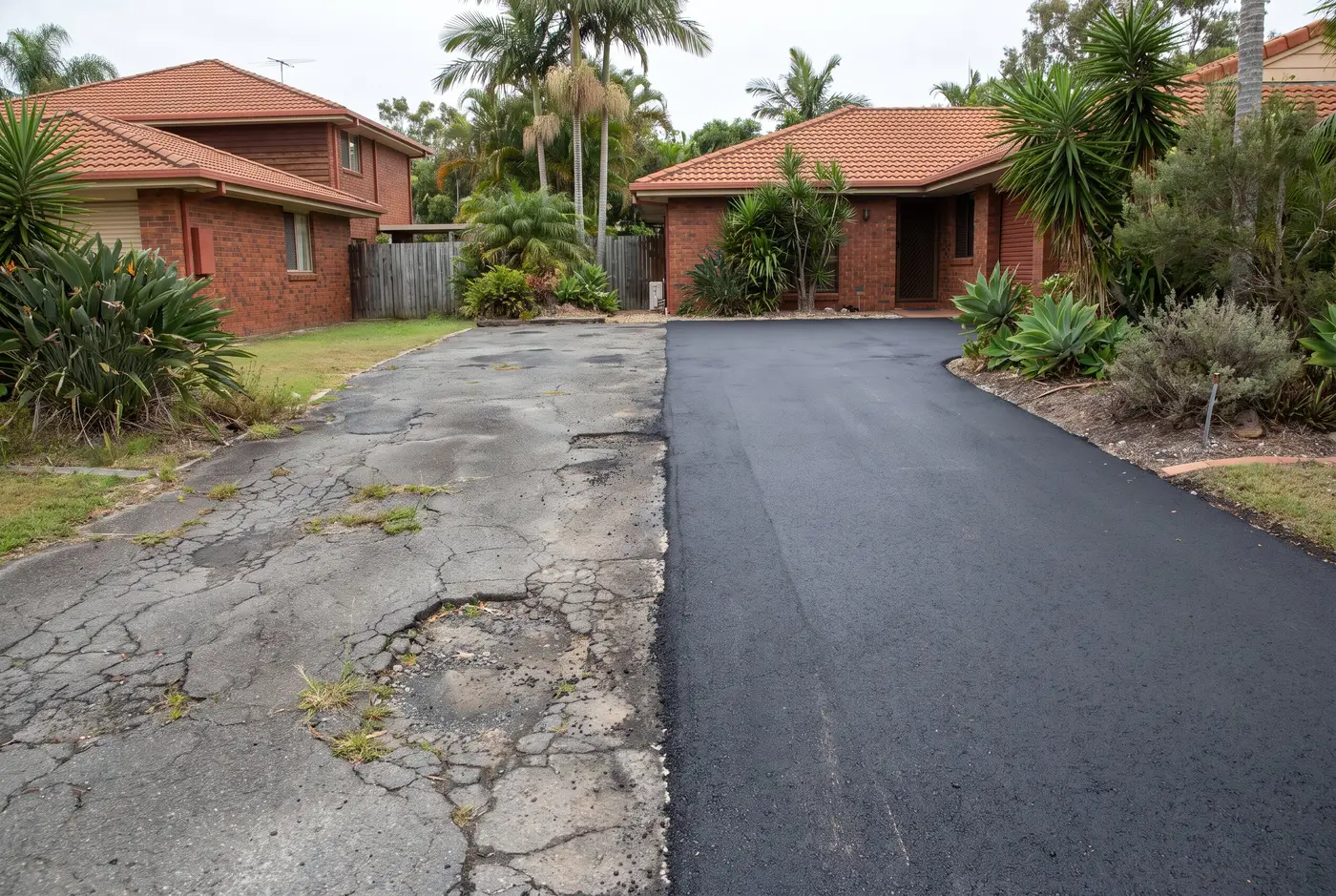
Resurfacing suits a driveway with a solid base and only surface wear, while replacement is the better choice once the base itself has failed.
A well-maintained driveway does more than guide cars to your home, it lifts kerb appeal, improves safety and adds value to your property. But when cracks, fading and general wear start to show, the big question arises: should you resurface your bitumen driveway or replace it fully? Understanding the difference can save you time, money and ongoing headaches.
Reading your driveway's condition
Every driveway ages naturally, especially in Australia's warm climate where sun exposure and heavy rain take their toll. The first step in deciding what to do is getting a clear picture of what's happening on and below the surface. Light cracking or roughness is often normal and doesn't necessarily mean the structure is failing.
If the foundation underneath is still sound, resurfacing can bring a driveway back to life. But when deeper issues show up, such as sinking sections, drainage problems or cracks that keep returning, they usually signal the base itself is no longer sound. Taking the time to assess the driveway properly means your money goes into the right fix, not a temporary patch.
When resurfacing makes sense
Resurfacing is the middle ground for driveways showing wear but not yet at structural failure. If the surface is ageing, a little uneven or carrying small cracks, a fresh layer of bitumen can restore strength and appearance without the cost of a full rebuild.
The process is quick, clean and efficient, with minimal disruption, which makes it a practical choice for families or businesses wanting a fast upgrade. Because it works with the existing base, resurfacing extends the driveway's life by several years without the expense of starting from scratch.
When replacement is the better option
Some driveways reach a point where resurfacing won't solve the underlying problem. Deep cracks, potholes, drainage issues or an unstable base are all signs the driveway has outlived its structure. Laying new bitumen over the top in these cases only hides the symptoms temporarily.
A full replacement gives you a genuinely fresh start. The old surface is removed, the foundation corrected, and a new surface laid with improved strength and durability. It carries a higher upfront cost but offers long-term peace of mind, especially for older driveways that have already needed several repairs. Replacement also lets you correct slope or drainage issues, helping prevent future water damage and extending the life of the new surface.
Comparing cost and long-term value
The cost difference between resurfacing and replacing is often the deciding factor. Resurfacing is generally the more affordable choice: it uses fewer materials, needs less labour and avoids excavation, which makes it a strong option for driveways with a healthy foundation.
Replacement costs more because of the extra work involved, removal, base preparation, levelling and installing new bitumen. That said, it's a longer-term investment that can deliver decades of performance when done properly. Weigh up both the upfront cost and the long-term value. Resurfacing may be cheaper today, but replacement can save more money over time if the base is already failing.
- Resurfacing: generally the more affordable option, using fewer materials and less labour. Best suited to driveways with surface-level wear.
- Replacement: a higher upfront cost due to excavation, rebuilding and installation, but a longer lifespan and greater structural reliability.
Choosing the right option for your home
Understanding your driveway's condition, especially the state of its base, is central to choosing the right approach. If your driveway only needs a fresh surface, resurfacing is a smart, budget-friendly option. If structural issues are present, replacement is the more reliable investment.
Speaking with an experienced contractor helps you make a confident call. They can identify problems you might not see and give recommendations suited to your property, climate and how the driveway gets used. For tailored advice and quality workmanship, request a free quote and we'll help you work out whether resurfacing or replacement is the right fit for your driveway.
Frequently asked questions
What's the difference between resurfacing and replacement?
Resurfacing adds a new bitumen layer on top of the existing base. Replacement rebuilds the entire driveway from the base up.
When is resurfacing the better option?
When the base is still strong and the issues are limited to the surface, such as light cracking or fading.
When should I replace my driveway instead?
Replacement is generally needed when there are deep cracks, potholes, drainage problems or a failing base.
Which option is more cost-effective?
Resurfacing is cheaper upfront. Replacement costs more initially but offers longer-term durability and value.
How long does a resurfaced driveway last?
A resurfaced driveway can last several years with proper maintenance, though it won't match the lifespan of a full rebuild.
How long does a new bitumen driveway last?
A well-built, fully replaced driveway can last decades when installed and maintained correctly.
How do I know which option is right for my property?
A professional inspection is the most reliable way to confirm whether resurfacing or replacement suits your driveway.